The Cheese That Wasn't Supposed to Be Food: How Military Logistics Created America's Most Iconic Ingredient
The Cheese That Wasn't Supposed to Be Food: How Military Logistics Created America's Most Iconic Ingredient
Bring up American cheese at the right dinner table and you'll get strong opinions. Food purists will tell you it's not real cheese — that it's a "cheese product," a processed facsimile built from emulsifiers and industrial shortcuts. Chefs will roll their eyes. Import enthusiasts will reach for the aged cheddar.
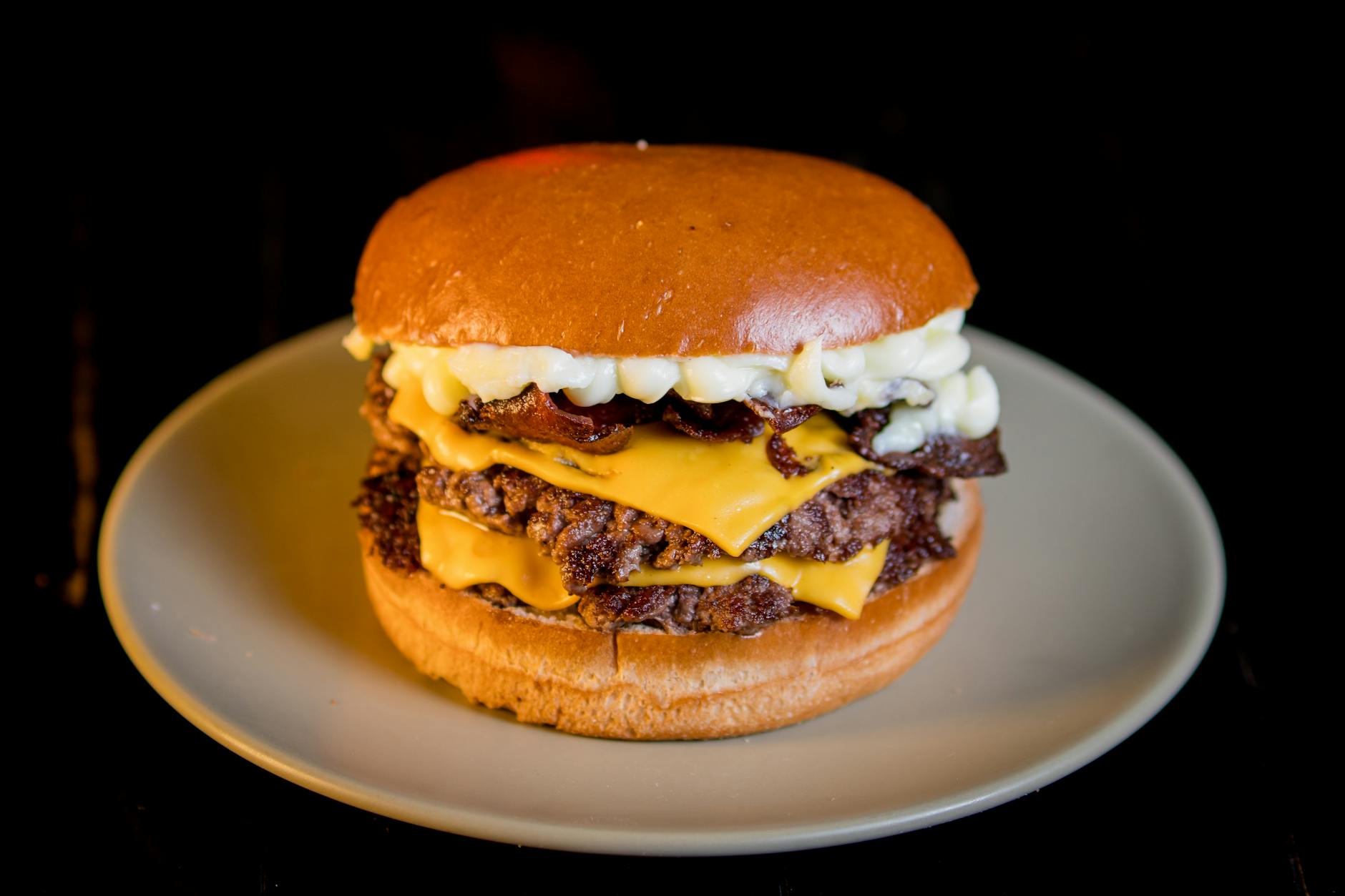
What almost nobody in that conversation will mention is that the orange square currently being dismissed was once a genuine technological breakthrough. That it fed millions of American soldiers across two World Wars. That without it, the American cheeseburger — one of the country's most recognizable culinary exports — would be a fundamentally different object.
The story of processed American cheese is not a story about cutting corners. It's a story about solving a hard problem, and accidentally creating a cultural institution in the process.
James Kraft and the Spoilage Problem
In the early 1900s, cheese was a perishable nightmare for anyone trying to move it long distances. Natural cheese — the kind made from aging curds in controlled conditions — was temperamental. It continued to age during shipping. It developed mold. It cracked, dried out, or turned in unpredictable ways depending on temperature and humidity. For a small cheese dealer trying to build a distribution business across a growing American market, spoilage wasn't an inconvenience. It was an existential threat to the bottom line.
James L. Kraft understood this problem firsthand. A Canadian-born entrepreneur who had set up a cheese wholesale operation in Chicago around 1903, Kraft was watching significant portions of his inventory go bad before it could reach customers. The economics were brutal. He needed cheese that could survive the journey.
Kraft's eventual solution, developed over several years of experimentation and refined through a patent he filed in 1916, involved blending natural cheeses together, heating the mixture, and adding emulsifying salts that prevented the fats and proteins from separating during the process. The result was a smooth, homogeneous product that could be poured into cans or molds, sealed, and shipped without refrigeration for extended periods.
It didn't taste exactly like natural cheese. It wasn't supposed to. It was designed to last, not to win a tasting competition.
The Military Contract That Changed Everything
Kraft's timing turned out to be extraordinary. He filed his patent in 1916 — one year before the United States entered World War I. The US military was facing its own version of the spoilage problem on a massive scale: how do you feed hundreds of thousands of soldiers across an ocean when traditional food supply chains break down under battlefield conditions?
The Army's answer, in part, was Kraft's processed cheese. The military purchased roughly six million pounds of it to supply American troops during WWI. Canned, shelf-stable, protein-dense, and consistent — it checked every box that military logistics required. Soldiers ate it. It worked. The contract validated the product in a way that no commercial marketing campaign could have.
When those soldiers came home, they brought their familiarity with processed cheese back into civilian life. Kraft's business grew rapidly through the 1920s, and the company leaned hard into consumer marketing, positioning its product as a modern, convenient alternative to the more temperamental natural cheeses that required careful handling.
Then World War II arrived, and the cycle repeated — only larger. Processed cheese became a staple of military rations again, this time feeding an even bigger mobilization. By the end of WWII, an entire generation of Americans had grown up eating it, cooking with it, and associating it with the practical, no-nonsense food culture of wartime and postwar domestic life.
The Cheeseburger, the Grilled Cheese, and the Cultural Lock-In
The postwar American food landscape was built for speed, convenience, and consistency. Diners, drive-ins, school cafeterias, and suburban home kitchens all operated on similar principles: food needed to be fast, affordable, and predictable. Processed cheese fit that environment perfectly in ways that aged cheddar or Gruyère simply didn't.
It melted evenly and completely, without the greasiness or clumping that natural cheeses produce under heat. It held its shape when cold and turned molten under a broiler. It was mild enough not to overwhelm whatever it was paired with. For the American hamburger — itself a product of industrial food culture — processed cheese wasn't a compromise. It was functionally ideal.
The grilled cheese sandwich, a Depression-era staple that became a school lunch institution, relied on the same properties. Velveeta, Kraft Singles, and their descendants became the assumed ingredient in millions of American kitchens not because advertising brainwashed people into accepting an inferior product, but because the product genuinely performed the specific task it was being asked to do.
What the Snobs Are Missing
The condescension directed at American processed cheese is, in a way, a compliment in disguise. It's only dismissible because it succeeded so completely that people forgot why it was made. Nobody mocks the technology behind canned goods for not tasting as fresh as a farmer's market tomato. Nobody criticizes the zipper for not being as elegant as hand-sewn buttons. We understand those things as practical solutions to practical problems.
Processed American cheese is the same thing — a preservation technology that solved a real logistical challenge, got turbocharged by military necessity, and ended up so deeply embedded in American food culture that it became invisible.
The next time someone dismisses the cheese on a diner cheeseburger as fake, it's worth remembering: that "fake" cheese fed the US Army through two World Wars, outlasted every refrigeration limitation of its era, and quietly became one of the most consequential food inventions in American history.
Not bad for something that started as a shipping solution.