A Ruined Batch of Wheat and the Birth of the American Breakfast Aisle
A Ruined Batch of Wheat and the Birth of the American Breakfast Aisle
Every morning, millions of Americans pour cereal into a bowl without giving it a second thought. It's just breakfast — fast, familiar, and completely unremarkable. But the reason that box exists at all traces back to a single mistake made in a sanitarium kitchen in Battle Creek, Michigan, sometime in the 1890s. Nobody planned it. Nobody was trying to revolutionize the American diet. Someone just forgot about a pot of wheat.
The Sanitarium That Ran on Strange Ideas
To understand how corn flakes happened, you have to understand the world they came from — and that world was genuinely bizarre by today's standards.
Dr. John Harvey Kellogg ran the Battle Creek Sanitarium, a sprawling wellness institution that attracted thousands of patients looking to reset their health. Kellogg was a Seventh-day Adventist and a firm believer that diet was the root of almost every human ailment. He was also deeply opposed to anything he considered overstimulating — which, in his view, included meat, alcohol, caffeine, and quite a few other things we won't get into here.
His mission was to feed his patients bland, easily digestible foods that would calm the body and cleanse the system. Grains were central to that philosophy. He and his younger brother Will Keith Kellogg spent years experimenting with grain-based foods in the sanitarium's kitchen, trying to develop something nutritious, simple, and palatable enough that patients would actually eat it.
It wasn't glamorous work. It was a lot of boiling, pressing, baking, and throwing things away.
The Pot That Changed Everything
The exact date is lost to history, but at some point in the mid-1890s, a batch of boiled wheat was left sitting out — probably because the brothers got pulled away to other work. When they came back to it, the dough had gone stale and slightly dried out. Most people would have dumped it. Instead, they ran it through the rollers anyway.
What came out wasn't a solid sheet of dough. It was individual flakes — thin, separate, and surprisingly crisp after baking. The staleness had changed the moisture content in a way that made the grains separate rather than stick together.
The patients loved them. John Kellogg was thrilled. He saw it as a health food breakthrough. Will Kellogg saw something else entirely: a business.
The Brother Who Wanted to Add Sugar
This is where the story gets complicated — and a little sad.
John Kellogg was a physician and a purist. The flakes were a medical product, full stop. Will Kellogg had a sharper commercial instinct and believed that if you added a little sugar to the recipe, you could sell these things to the entire country, not just sanitarium patients. John refused. The two brothers had always had a tense relationship, and this disagreement pushed it past the breaking point.
Will eventually broke away, founded the Battle Creek Toasted Corn Flake Company in 1906 — pivoting from wheat to corn — and started marketing directly to American households. He added the sugar. He put his signature on every box as a mark of authenticity. He ran aggressive national advertising campaigns at a time when most food companies barely had a marketing budget.
John, furious, sued. The legal battle over the Kellogg name dragged on for years. Will won. John never fully forgave him.
From Health Food to Household Staple
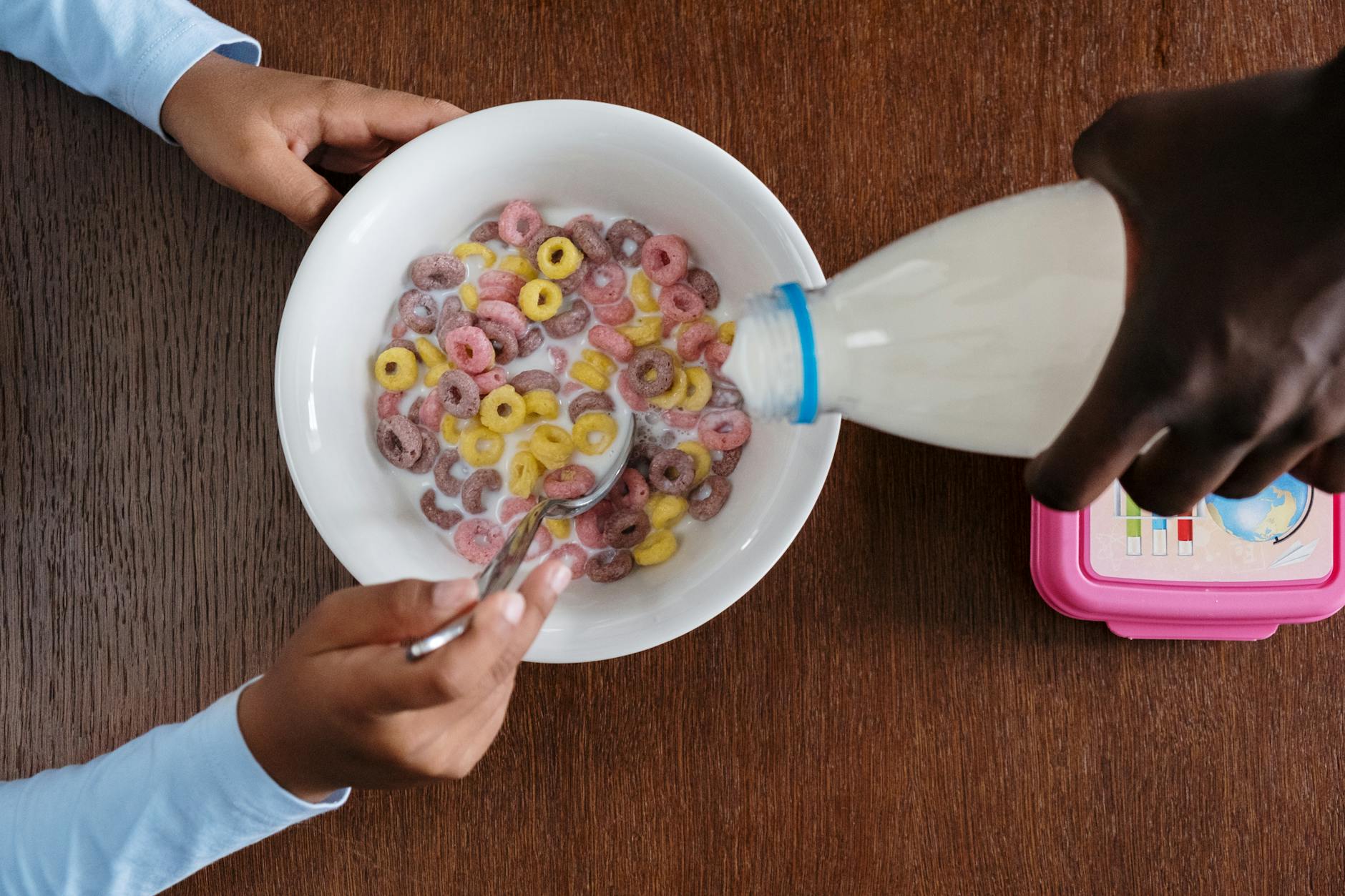
What Will Kellogg understood — and what the cereal industry that followed him understood — was that convenience sells. In the early 1900s, the typical American breakfast involved serious cooking: eggs, meat, porridge that had to be stirred and watched. Corn flakes required nothing but a bowl and some milk. For busy families, that was a revelation.
Competitors rushed in almost immediately. C.W. Post, who had actually been a patient at the Battle Creek Sanitarium, launched his own grain-based cereals and became one of Kellogg's fiercest rivals. By the 1920s, Battle Creek had become something like the Silicon Valley of breakfast foods, with dozens of companies churning out flaked, puffed, and toasted grain products.
The industry never really slowed down. It just kept expanding — adding sugar, adding mascots, adding marshmallows, adding protein claims — until the cereal aisle became one of the most competitive stretches of real estate in any American grocery store.
What a Forgotten Pot of Wheat Actually Started
It's worth pausing on how thin the thread is between that stale batch of dough and the $10 billion American cereal market that exists today. No grand vision. No research team. Just two brothers who didn't throw something away when they probably should have, and one of them who saw a country full of people who needed a faster breakfast.
The next time you're standing in the cereal aisle, scanning a wall of boxes that stretches further than it has any right to, remember that it all started with a mistake nobody meant to make — in a Michigan kitchen that was trying to cure people, not feed a nation.