The American Cookie That Fooled the World Into Thinking It Was Chinese
The Great Cookie Mystery
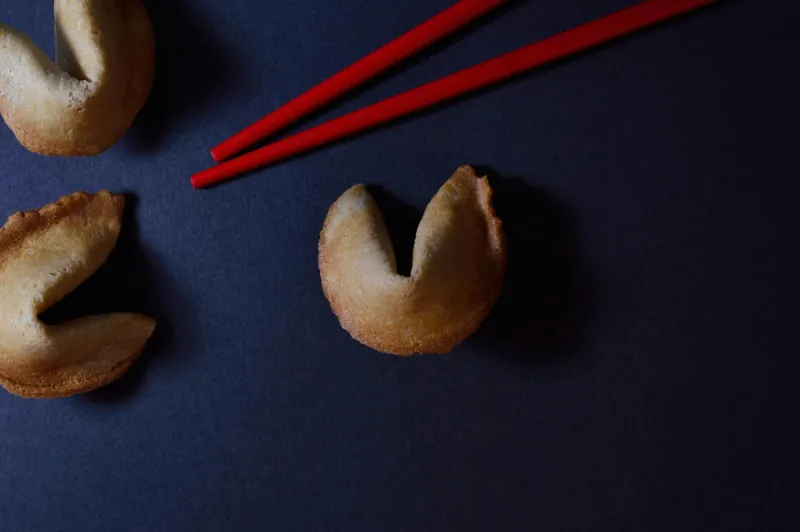
Walk into any Chinese restaurant in America, and your meal will almost certainly end the same way: with a crispy, golden cookie containing a slip of paper bearing your "fortune." The ritual is so embedded in American dining culture that most people assume fortune cookies have been part of Chinese cuisine for centuries.
They haven't. Fortune cookies are about as Chinese as apple pie — which is to say, not at all. They're a purely American invention, created in California sometime in the early 1900s. And despite nearly 120 years of history, two cities are still fighting over who gets the credit.
The San Francisco Claim
The first origin story centers on Makoto Hagiwara, the chief gardener of San Francisco's Japanese Tea Garden in Golden Gate Park. According to this version, Hagiwara began serving visitors small, folded cookies containing thank-you notes and fortunes sometime around 1907.
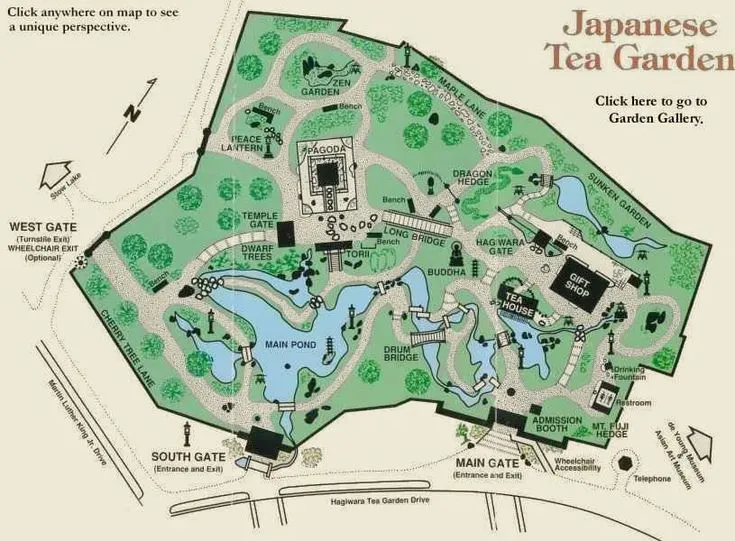 Photo: Makoto Hagiwara, via i.pinimg.com
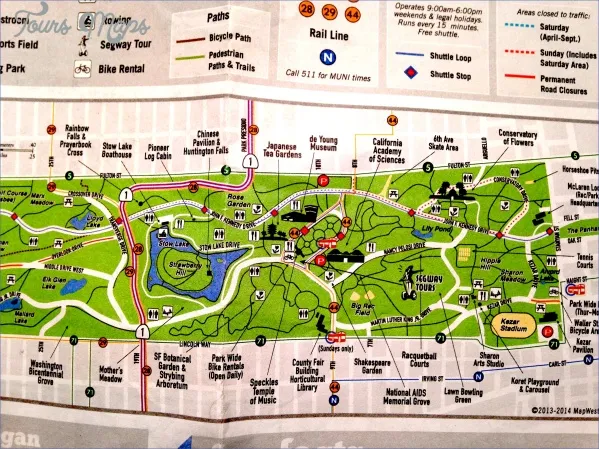 Photo: Golden Gate Park, via toursmaps.com
Hagiwara's family maintains that he adapted the recipe from a traditional Japanese confection called "tsujiura senbei" — crackers that contained random fortunes and were sold at temples and shrines throughout Japan. The cookies were part of Hagiwara's effort to create an authentic Japanese tea garden experience for San Francisco visitors.
The story gains credibility from historical records showing that Hagiwara did indeed serve cookies at the tea garden, and that Japanese fortune crackers were a real tradition. But the trail gets murky when trying to connect those early tea garden treats to the fortune cookies that eventually appeared in Chinese restaurants.
Los Angeles Fights Back
Not to be outdone, Los Angeles has its own claim to fortune cookie fame. The LA story revolves around David Jung, a Chinese immigrant who founded the Hong Kong Noodle Company in the city's Chinatown district around 1918.
Jung's supporters argue that he created fortune cookies as a way to cheer up the poor and unemployed people he saw wandering near his restaurant during tough economic times. He allegedly handed out the cookies for free, each containing an inspirational Bible verse or uplifting message.
This version has the advantage of directly connecting fortune cookies to Chinese-American restaurants from the very beginning. But like the San Francisco story, the evidence is largely anecdotal, passed down through family accounts and local folklore.
The Japanese Connection
What both American origin stories tend to downplay is the fortune cookie's likely Japanese roots. Food historians who have dug into the cookie's ancestry point to compelling evidence that the concept arrived in California with Japanese immigrants, not Chinese ones.
Traditional Japanese "omikuji" — fortune-telling paper strips sold at temples — bear a striking resemblance to fortune cookie messages. And "tsujiura senbei," the crackers that Hagiwara allegedly adapted, were being made in Japan long before anyone in America had heard of fortune cookies.
Several California bakeries run by Japanese families were producing fortune-like cookies in the early 1900s. The Umeya confectionery in Los Angeles, founded by Japanese immigrant Seiichi Kito, was definitely making fortune cookies by the 1920s and may have been doing so much earlier.
How Chinese Restaurants Took Over
So how did a probably-Japanese, definitely-American cookie become synonymous with Chinese dining? The answer lies in one of the most shameful chapters of American history: the World War II internment of Japanese Americans.
When the U.S. government forcibly relocated Japanese American families to internment camps in 1942, many of the small businesses that had been producing fortune cookies — including several bakeries in Los Angeles and San Francisco — were shuttered overnight. The recipes and production methods didn't disappear, though. They were picked up by Chinese American entrepreneurs who saw an opportunity.
Chinese restaurants were already popular with American diners, and the fortune cookie fit perfectly into the experience Americans expected from "exotic" Asian cuisine. The cookies were cheap to produce, had a long shelf life, and provided a memorable ending to the meal.
By the 1950s, fortune cookies had become standard in Chinese American restaurants across the country. Most diners simply assumed they were part of an authentic Chinese dining tradition.
The Irony of Authenticity
The most ironic twist in the fortune cookie story is what happened when American Chinese food chains tried to expand into China itself. Panda Express and other American brands discovered that actual Chinese diners had no idea what fortune cookies were.
To people in China, fortune cookies looked like bizarre American inventions — which, of course, they were. Several American restaurant chains had to explain to Chinese customers that the cookies were part of "American-style Chinese food," a cuisine that had evolved independently in the United States.
This cultural boomerang effect highlights how thoroughly fortune cookies had been absorbed into American assumptions about Chinese culture. An American invention, possibly based on Japanese traditions, had become so associated with Chinese dining that Americans were surprised to learn Chinese people had never heard of them.
The Modern Fortune Empire
Today, fortune cookies are a multimillion-dollar industry centered primarily in California and New York. The largest producer, Wonton Food Inc. in Queens, churns out over 60 million fortune cookies annually, each containing messages written by a small team of professional fortune writers.
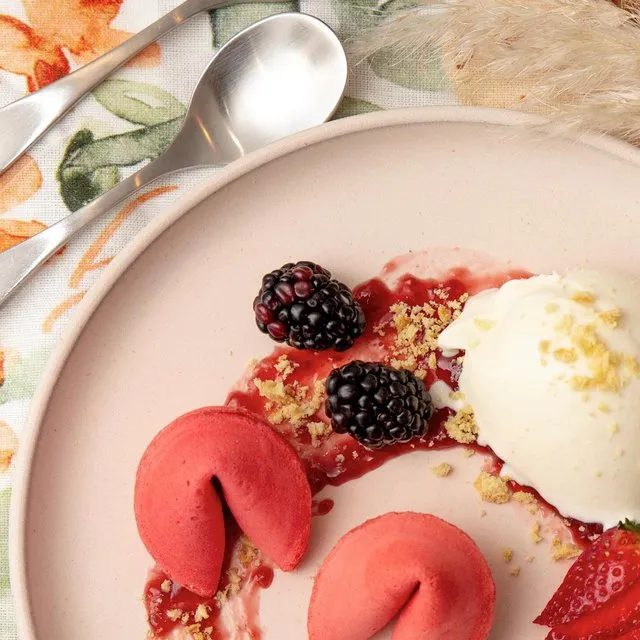 Photo: Wonton Food Inc., via wontonfood.com
The cookies have evolved far beyond their simple origins. Modern fortune cookies contain everything from lottery numbers to QR codes, and specialty versions appear at weddings, corporate events, and holiday celebrations. Some restaurants have even experimented with chocolate-dipped versions and custom messages.
The Persistence of Food Myths
The fortune cookie story reveals something fascinating about how food traditions develop in immigrant communities. Chinese American restaurateurs didn't set out to deceive anyone — they were simply adapting to American expectations and building successful businesses with the tools available to them.
But the persistence of the "Chinese fortune cookie" myth shows how easily food origins can be obscured, especially when they involve immigrant communities whose stories aren't always well-documented or widely told.
The next time you crack open a fortune cookie, remember: you're not participating in an ancient Chinese tradition. You're experiencing a uniquely American invention that perfectly captures the complicated, creative, and sometimes accidental ways that cultures blend and evolve in the melting pot of American dining.