The Pocket That Changed Cooking Forever
Percy Spencer was having a perfectly ordinary day at Raytheon's laboratory in 1945 when he noticed something extraordinary. The self-taught engineer was testing a military radar unit called a magnetron when he reached into his pocket for a snack and discovered his chocolate bar had completely melted. Most people would have cursed the ruined candy and moved on. Spencer started experimenting.
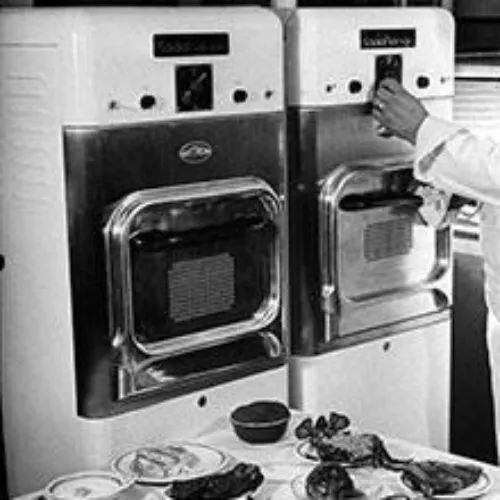 Photo: Percy Spencer, via time.graphics
The magnetron was generating microwaves for radar systems used to detect enemy aircraft during World War II. Spencer realized that the same electromagnetic radiation that helped win the war might also cook food. It was an accidental discovery that would eventually put a miniature radar transmitter in nearly every American home.
From Radar Waves to Radio Cooking
Intrigued by his melted chocolate, Spencer decided to test his theory with other foods. He placed popcorn kernels near the magnetron and watched them pop rapidly. Next, he tried an egg, which promptly exploded all over his colleague's face. These crude experiments convinced Spencer that microwaves could heat food from the inside out, cooking it much faster than conventional ovens.
The physics behind Spencer's discovery were actually well-understood. Microwaves cause water molecules in food to vibrate rapidly, generating heat through friction. But no one had considered the culinary applications of this electromagnetic radiation. Spencer's accidental insight bridged the gap between military technology and domestic convenience.
The Refrigerator-Sized Oven
Raytheon's first commercial microwave oven, the "Radarange," debuted in 1947 and was nothing like the compact appliances we know today. Standing six feet tall, weighing 750 pounds, and costing $5,000 (about $60,000 in today's money), it was marketed exclusively to restaurants and industrial kitchens. The massive machine required water cooling and consumed 3,000 watts of power—enough to dim the lights in most buildings.
Early adopters were mostly airlines and vending machine companies who needed to heat food quickly for large numbers of customers. The technology worked, but the size, cost, and complexity made home use impossible. Spencer's breakthrough needed nearly two decades of refinement before it could fit on a kitchen counter.
Shrinking the Revolution
The key breakthrough came in 1965 when Raytheon acquired Amana Refrigeration. Amana's engineers focused on miniaturizing microwave technology for home use, reducing the magnetron's size and power requirements while maintaining cooking effectiveness. They also solved the safety concerns that had limited early adoption—proper shielding and automatic shut-offs made microwaves safe for untrained home cooks.
The first countertop microwave, the Amana Radarange RR-1, launched in 1967 for $495 (about $4,000 today). While still expensive, it was finally affordable for middle-class families who valued convenience over cost. The compact design fit standard kitchen layouts, and simple controls made operation foolproof.
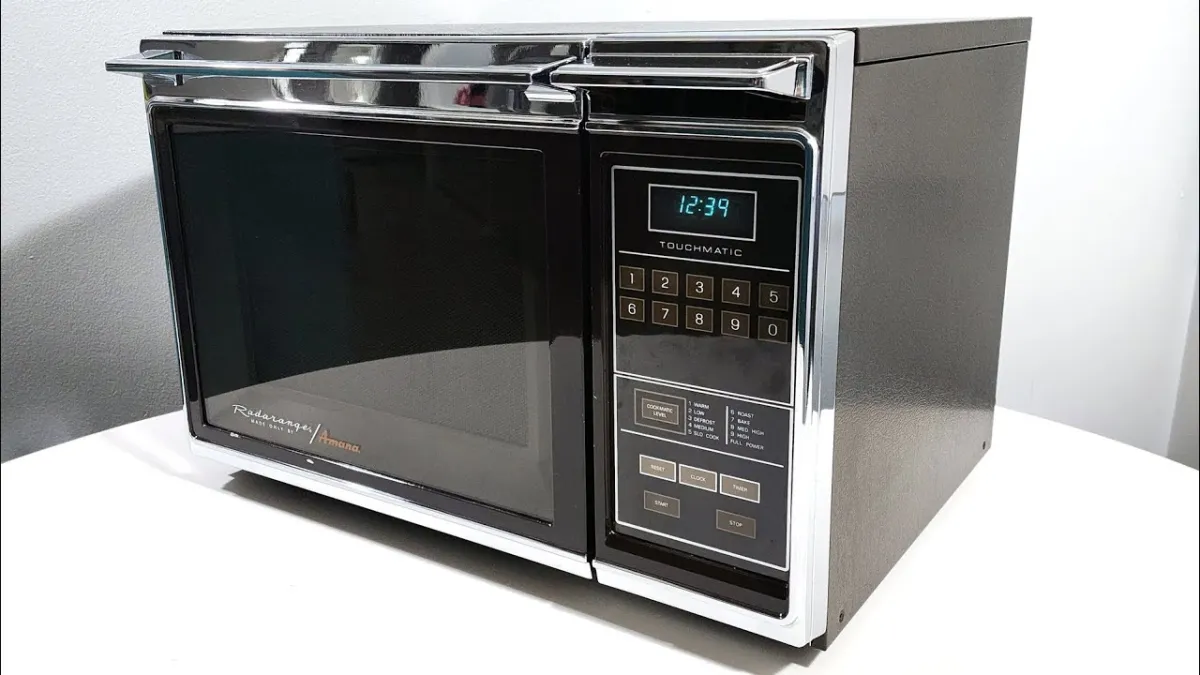 Photo: Amana Radarange RR-1, via i.ytimg.com
The Speed Revolution
Microwaves transformed American eating habits by making fast food preparation possible at home. Frozen dinners, which had struggled to find acceptance due to long oven heating times, suddenly became convenient weeknight solutions. Working parents could heat meals in minutes rather than hours, fundamentally changing family dinner routines.
The technology also enabled entirely new food categories. Microwave popcorn, instant oatmeal, and hot pockets were all products designed specifically for microwave preparation. Food manufacturers reformulated existing products to cook better in microwaves, adding moisture and adjusting packaging to optimize heating patterns.
From Luxury to Necessity
By 1975, microwave sales exceeded gas range sales for the first time. The appliance that had once required industrial installation was becoming standard kitchen equipment. Prices dropped steadily as manufacturing scaled up and competition increased. By the 1980s, basic microwave ovens cost less than $200, making them accessible to nearly every American household.
The cultural impact was profound. Microwaves didn't just change how Americans cooked—they changed when and what they ate. The technology enabled the rise of convenience foods, two-career households, and the decline of traditional meal preparation. Spencer's melted chocolate bar had accidentally accelerated the pace of American life.
The Unintended Consequences
While Spencer solved the problem of slow cooking, his invention created new challenges. Nutritionists worried about the health effects of microwave-prepared foods. Traditionalists mourned the loss of cooking skills and family meal rituals. The same technology that promised convenience also contributed to the processed food industry's expansion.
Today, over 90% of American homes contain microwave ovens, making Spencer's accidental discovery one of the most successful technology transfers from military to civilian use. The engineer who noticed his melted candy bar had inadvertently created a kitchen revolution that prioritized speed over tradition.
The Forgotten Father of Fast Food
Percy Spencer received numerous patents for his microwave cooking innovations but never became wealthy from his discovery. He remained a Raytheon engineer until retirement, continuing to work on radar and missile guidance systems. Despite revolutionizing American cooking, Spencer preferred traditional preparation methods and rarely used microwaves in his own kitchen.
His story demonstrates how accidental discoveries can reshape entire industries when curious minds pay attention to unexpected results. Spencer's melted chocolate bar wasn't just a ruined snack—it was the beginning of America's relationship with instant gratification in the kitchen.