The Wire That Won a War: How Norway's Paper Clip Became Hitler's Most Feared Symbol
The Office Supply That Terrified the Third Reich
In 1940s Norway, wearing a paper clip on your lapel could get you arrested, beaten, or worse. The Nazis were so terrified of this innocent office supply that they banned it entirely, making possession a criminal offense. How did a bent piece of wire become one of World War II's most powerful symbols of resistance?
The story begins decades earlier, in a completely different context—one involving national pride, patent disputes, and the kind of bureaucratic drama that would make even the most mundane office worker roll their eyes.
The Invention That Almost Wasn't
Contrary to popular belief, the paper clip wasn't actually invented by Johan Vaaler, the Norwegian engineer who's often credited with its creation. In 1899, Vaaler did file a patent in Germany for a wire fastening device, but his design looked nothing like the paper clips we use today. His contraption was more like a twisted spring that required special tools to operate—hardly the elegant simplicity we associate with the modern paper clip.
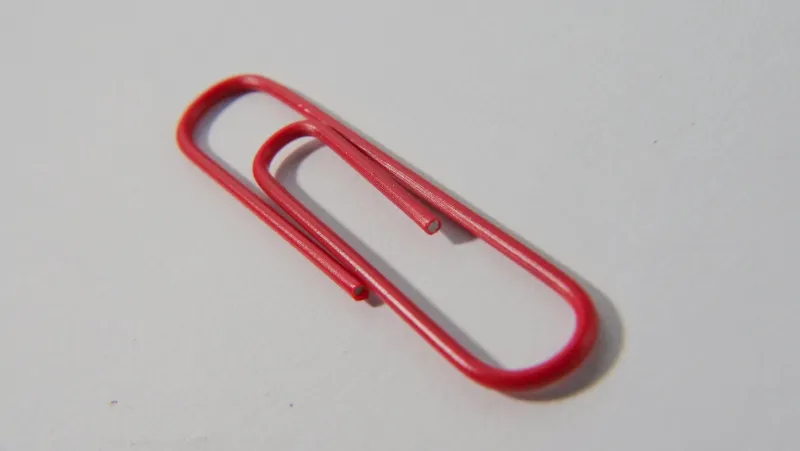
The real winner in the paper clip wars was actually British. The "Gem" paper clip—the smooth, double-looped design that dominates offices worldwide—was developed by the British Gem Manufacturing Company around 1890. Unlike Vaaler's complicated mechanism, the Gem clip could be manufactured cheaply and used with one hand. It was the iPhone of paper fasteners: intuitive, efficient, and impossible to improve upon.
But here's where history gets interesting. Despite the British origins of the modern paper clip, Norwegians had claimed Vaaler as their national inventor. This bit of patriotic mythology would prove crucial when Norway needed symbols of resistance against Nazi occupation.
When Office Supplies Became Weapons of War
When Germany invaded Norway in April 1940, the country's symbols of independence were systematically banned. Norwegian flags disappeared from public buildings. National emblems were forbidden. Even wearing red, white, and blue together could land you in trouble with the occupying forces.
But the Norwegians were creative. They needed a way to show solidarity and resistance that wouldn't immediately trigger Nazi suspicion. Enter the humble paper clip.
Someone—history doesn't record exactly who—remembered that Johan Vaaler was Norwegian. Whether or not he actually invented the modern paper clip didn't matter. What mattered was that Norwegians could claim this everyday object as their own creation. Wearing a paper clip became a subtle way to declare: "We are Norwegian, we resist, and we will not be broken."
The symbolism was perfect. Paper clips hold things together—just like the Norwegian people needed to hold together during occupation. They're made of strong metal that bends but doesn't break easily. And most importantly, they were so common that Nazi soldiers initially didn't recognize them as symbols of defiance.
The Resistance That Spread Like Wildfire
The paper clip resistance movement exploded across Norway with remarkable speed. Students began wearing them to school. Workers attached them to their jackets. Even Norwegian police officers—forced to serve under Nazi oversight—found ways to display the tiny symbols of rebellion.
The Germans caught on quickly. By late 1940, wearing paper clips was officially banned. Nazi soldiers would stop people on the street and search for the contraband office supplies. Getting caught could mean imprisonment, interrogation, or worse.
But the ban only made the paper clips more powerful. Norwegians began hiding them in creative ways—sewn into clothing, worn as jewelry, or simply carried in pockets. The more the Nazis cracked down, the more meaningful the simple wire loops became.
Beyond Norway: A Symbol That Crossed Borders
The Norwegian paper clip resistance inspired similar movements across occupied Europe. In France, people began wearing them alongside other subtle resistance symbols. Dutch citizens adopted the practice, as did Belgians and Danes.
American newspapers picked up the story, fascinated by how an office supply had become a weapon against fascism. The paper clip represented something deeply American—the idea that freedom couldn't be crushed, no matter how overwhelming the oppressive force.
The Legacy That Lives in Every Office
Today, millions of Americans use paper clips without thinking about their extraordinary wartime service. But in Norway, the story lives on. The country has erected monuments to both Johan Vaaler and the resistance movement his supposed invention inspired.
The truth about who really invented the modern paper clip matters less than what the paper clip came to represent: the power of ordinary objects to carry extraordinary meaning. In the hands of Norwegian resisters, a simple piece of bent wire became proof that even the smallest acts of defiance can shake the foundations of tyranny.
Every time you grab a paper clip from your desk drawer, you're handling a piece of history—a reminder that sometimes the most powerful symbols of resistance are hiding in plain sight, waiting for the right moment to change the world.
The Nazis learned this lesson the hard way: never underestimate the subversive power of office supplies.