The Reject That Rewired American Music: How the Roland TR-808 Went from Bargain Bin to Cultural Cornerstone
The Reject That Rewired American Music: How the Roland TR-808 Went from Bargain Bin to Cultural Cornerstone
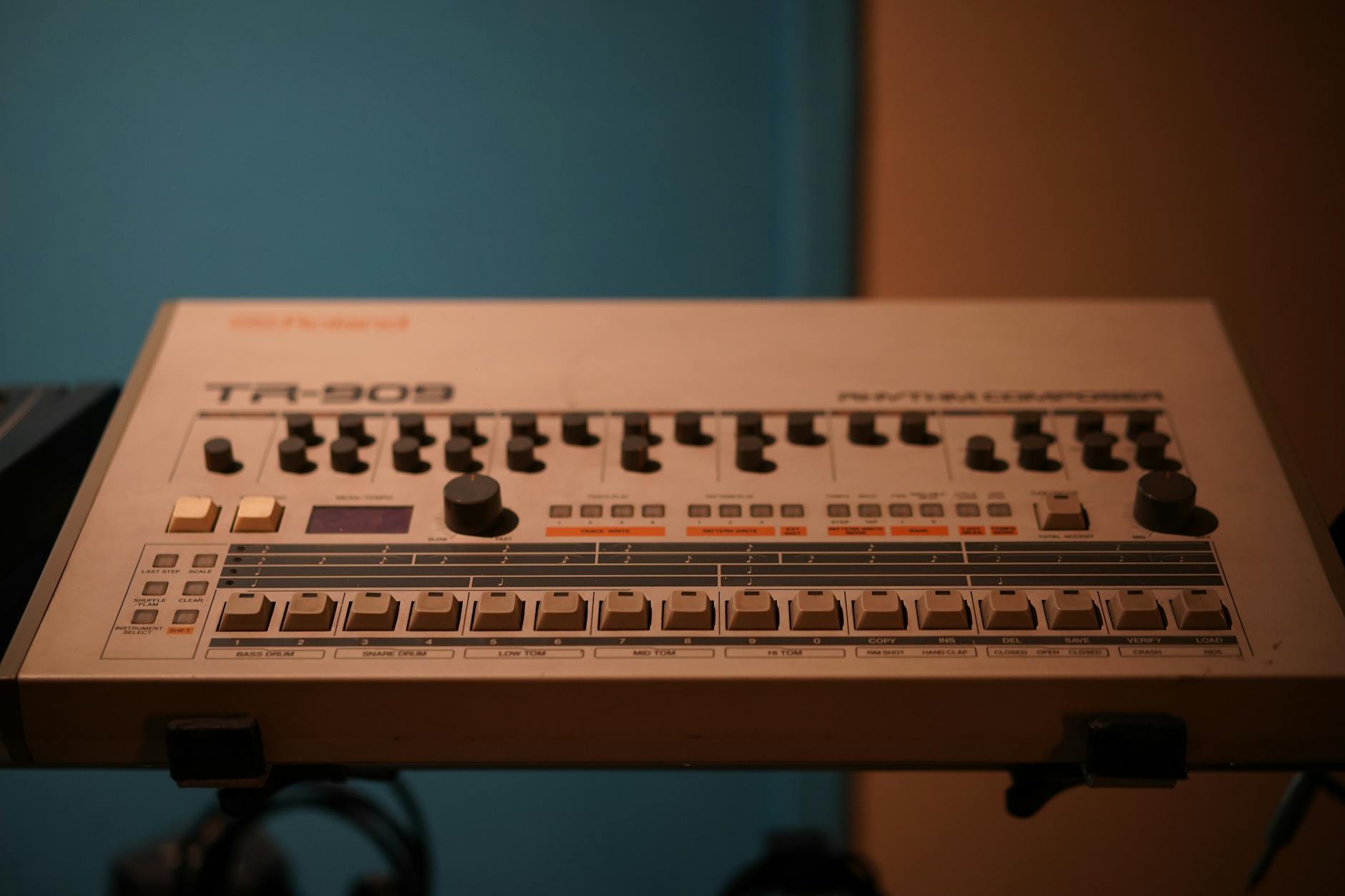
There's a beat underneath almost every major genre of popular music you've heard in the last 40 years. It's that deep, almost cartoonishly round kick drum — the one that doesn't sound quite like anything a real drummer could produce. You've heard it in Kanye West records, in early Marvin Gaye-era R&B remixes, in trap anthems, in pop radio staples. That sound has a single origin point: a boxy, cream-colored machine that Roland Corporation introduced in 1980 and quietly discontinued three years later after disappointing sales.
The Roland TR-808 Rhythm Composer wasn't supposed to change the world. It was barely supposed to pay for itself.
Built to Simulate, Dismissed for Failing
Roland released the TR-808 as a practice tool — something musicians could use to rehearse with a beat when a live drummer wasn't available. The company had already found modest success with earlier rhythm machines, but the 808 was meant to be a step up: programmable, affordable, and versatile enough for home studios and rehearsal spaces.
The problem, according to critics at the time, was that it didn't sound real enough. Professional musicians and studio engineers in 1980 were chasing authenticity. They wanted drum machines that fooled the ear into thinking a human being was behind the kit. The 808's kick drum was too boomy, too synthetic, too electronic to pass as the genuine article. Its snare sounded like a rattlesnake in a tin can. Its hi-hats hissed in ways that no acoustic cymbal ever would.
Reviews were lukewarm. Sales followed. Roland officially discontinued the TR-808 in 1983 after producing somewhere around 12,000 units — a modest run by any measure. Unsold inventory trickled into secondhand shops and music liquidators, where the machines sat with dramatically reduced price tags, waiting for someone to find a use for them.
The South Bronx Finds a Different Answer
Here's where the story takes its turn.
In the early 1980s, the South Bronx was the birthplace of something new and entirely American. Hip-hop was emerging from block parties and community centers, built by DJs and producers who were working with whatever they could get their hands on. Budget was a real constraint. Professional studio equipment was out of reach. But a discontinued drum machine selling for next to nothing? That was accessible.
Producers like Afrika Bambaataa got hold of the TR-808 and immediately heard something the professional music world had missed entirely. The machine's so-called flaws — that exaggerated low-end kick, that synthetic snap — sounded enormous through the kind of cheap speakers and portable sound systems that defined street-level music culture. Where high-end studio monitors revealed the 808's artificiality as a weakness, consumer-grade playback equipment transformed it into raw, physical power.
Bambaataa's 1982 track Planet Rock was one of the first major recordings to put the 808 front and center, and it didn't try to hide what the machine was. It celebrated it. The beat was undeniably electronic, unapologetically synthetic, and completely unlike anything that had come before it.
The music world took notice.
From Street Corners to the Studio
Once hip-hop producers cracked the code, the 808 spread fast. By the mid-1980s, it was appearing in recordings far outside the genre that first embraced it. Marvin Gaye used it on Sexual Healing in 1982. Whitney Houston's early records carried its fingerprints. Electronic and new wave artists across the US and UK picked it up, drawn by the same qualities that had initially made industry insiders skeptical.
The machine's programmability was a huge part of its appeal. Unlike live drummers, the 808 was endlessly patient, perfectly consistent, and could be pushed into rhythmic patterns that no human limbs could replicate. For a generation of producers building music in bedrooms and small studios rather than expensive recording facilities, that combination of affordability and flexibility was transformative.
As hip-hop matured through the late 1980s and into the 1990s, the 808 became foundational. Producers in Atlanta took it even further, slowing down its kick drum patterns and layering them into the crawling, bass-heavy sound that would eventually become trap music. When Kanye West built much of 808s & Heartbreak (2008) around the machine — even naming the album after it — he was paying tribute to a lineage that stretched back to those early South Bronx block parties.
The Failure That Keeps Winning
Roland eventually acknowledged what had happened. In 2014, the company released the TR-8, a modern recreation designed to replicate the 808's original sound. Countless software plugins now emulate it. The machine that failed commercially in three years has been actively imitated for over four decades.
What makes the 808's story so striking isn't just that a rejected product found a second life. It's how that second life happened. There was no rebranding campaign, no corporate pivot, no innovation lab that recognized the machine's potential and repositioned it for a new market. The TR-808 was rescued by resourceful, budget-constrained musicians who heard something in its imperfections that the professionals had dismissed.
The greatest commercial failure in Roland's early catalog became the heartbeat of modern American music — not despite its flaws, but because of them. Sometimes the reject sitting in the discount bin is exactly what the future was waiting for.