The Slippery Accident in a DuPont Lab That Ended Up in Your Kitchen
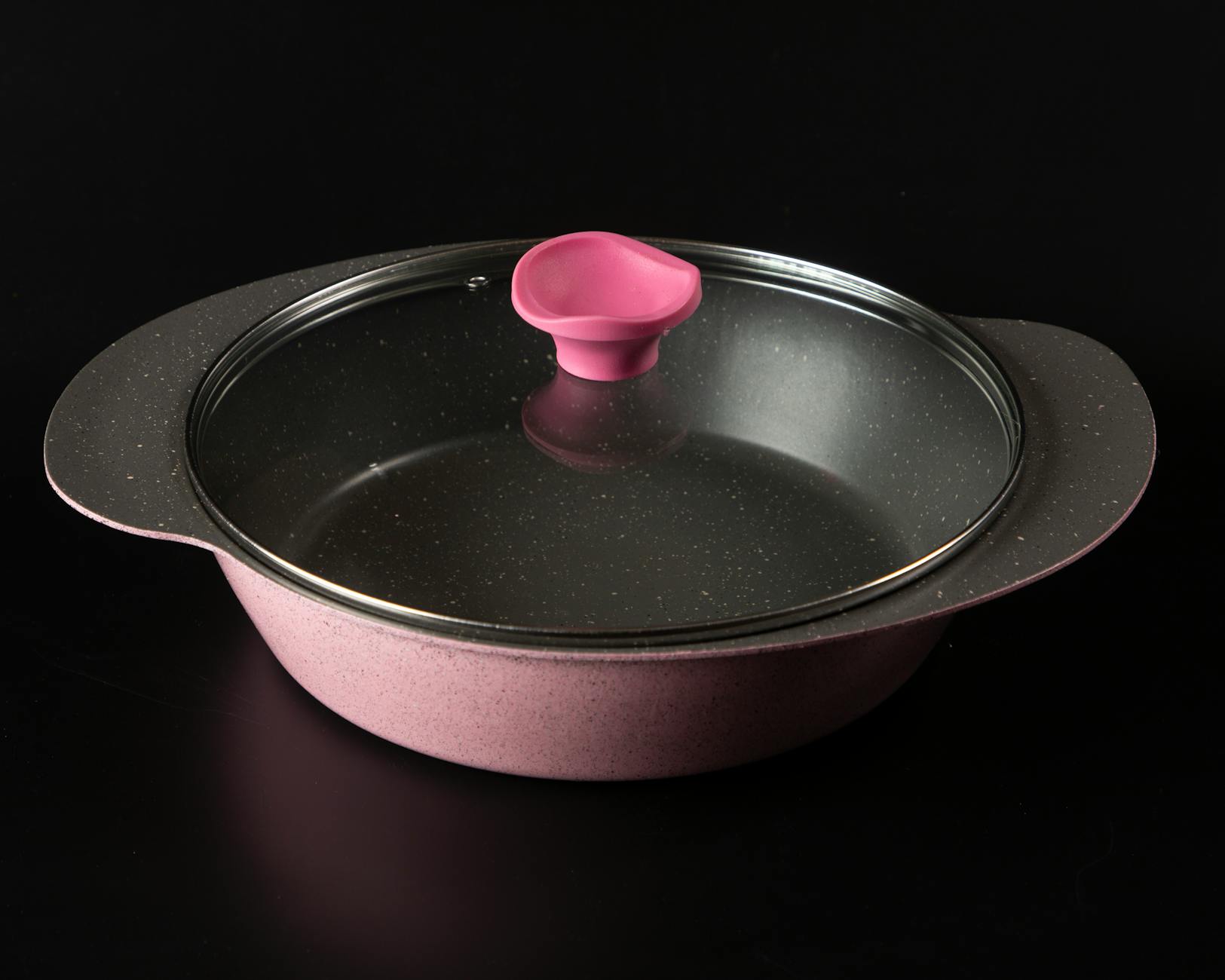
The Slippery Accident in a DuPont Lab That Ended Up in Your Kitchen
The nonstick frying pan is one of those kitchen items so mundane it barely registers. You grab it, cook your eggs, rinse it off. It's just there. But the material that makes it work — polytetrafluoroethylene, or Teflon — has one of the more improbable origin stories in American industrial history. It involves a lab accident, classified military research, a space race, and a Frenchman who went fishing.
A Friday Morning in New Jersey, 1938
Roy Plunkett was 27 years old and working as a chemist at DuPont's Jackson Laboratory in Deepwater, New Jersey. On the morning of April 6, 1938, he was experimenting with refrigerant gases — specifically, he was trying to develop a new, safer alternative to the toxic refrigerants then in common use.
His experiment called for tetrafluoroethylene gas stored in small cylinders. When he opened the valve on one of the cylinders that morning, nothing came out. The cylinder registered as having weight — meaning something was inside — but no gas was flowing.
A less curious person might have set it aside. Plunkett cut the cylinder open.
Inside, he found a white, waxy powder coating the walls of the container. The gas had polymerized — essentially, the molecules had linked together into long chains and solidified. Plunkett tested the substance. It was extraordinarily slippery. It was chemically inert, meaning almost nothing would bond to it or react with it. It could withstand temperatures that would destroy most other materials.
He had no idea what to do with it. DuPont patented it in 1941 under the name Teflon, but for a few years, it sat in the category of "interesting laboratory curiosity with no obvious application."
The Military Finds a Use for Something Nothing Can Touch
The application arrived with World War II, and it was about as far from cooking as you can get.
The Manhattan Project — the classified American program to develop the atomic bomb — had a specific, urgent problem. Uranium enrichment required handling extraordinarily corrosive fluorine compounds. Existing materials couldn't stand up to them. Gaskets failed. Valves corroded. Equipment broke down.
Teflon, which reacted with almost nothing, was the answer. It was quietly pulled into classified military production, used to coat the pipes, valves, and seals that handled the most corrosive elements in the enrichment process. For years, its existence was essentially a military secret.
After the war, DuPont began looking at commercial applications. Teflon found its way into industrial uses — coatings for equipment, wire insulation, bearings — but the consumer market remained elusive. The material was difficult and expensive to apply to cookware in a way that would actually hold up. For more than a decade, it stayed largely out of American homes.
A French Engineer Goes Fishing
The bridge between Teflon and your kitchen drawer was built, improbably, by a French engineer named Marc Grégoire.
Grégoire had been using Teflon to coat his fishing lines — a trick to prevent them from tangling. His wife, Colette, had a thought: if it worked on fishing line, why not on a pan? She pushed him to try coating a cooking surface with it.
Grégoire spent time developing a method to bond Teflon to aluminum, and in 1956, he and Colette founded a company called Tefal (a portmanteau of Teflon and aluminum) to sell nonstick pans in France. They were a hit.
The American market opened up shortly after. In 1961, a US importer named Thomas Hardie brought Tefal pans to the States and began selling them under the name "The Happy Pan." The timing was good: the early 1960s were a moment of genuine enthusiasm for modern, science-forward consumer products. A pan that nothing could stick to felt almost futuristic.
Sales were strong enough that American manufacturers quickly moved to produce their own Teflon-coated cookware, and within a few years, the nonstick pan had become a standard fixture in American kitchens.
The Space Race Connection
There's one more chapter worth noting. NASA's engineers, working through the 1960s on materials that could withstand the brutal temperature extremes of space, leaned heavily on Teflon. It coated wiring, protected equipment, and was used in spacesuits. The material's trajectory — from a lab accident to military secrecy to the space program to the kitchen — is a neat encapsulation of how Cold War-era science filtered into everyday American life.
Today, Teflon-style nonstick coatings are everywhere: pans, baking sheets, rice cookers, waffle irons. The global nonstick cookware market is worth billions of dollars. DuPont's patent expired long ago, and dozens of manufacturers produce their own versions of what Roy Plunkett found coating the inside of a frozen gas cylinder on a spring morning in New Jersey.
The Accident That Stuck
Plunkett didn't set out to make cooking easier. He was trying to build a better refrigerant. Colette Grégoire wasn't thinking about kitchen innovation — she was thinking about a fishing line. The engineers at the Manhattan Project certainly weren't picturing scrambled eggs.
That's what makes this one worth knowing. The most ordinary objects in your home often carry the fingerprints of accidents, wars, space programs, and fishing trips. The nonstick pan is just especially good at not showing them.