Knock, Sneeze, Repeat: Five Superstitions That Were Once Just Good Advice

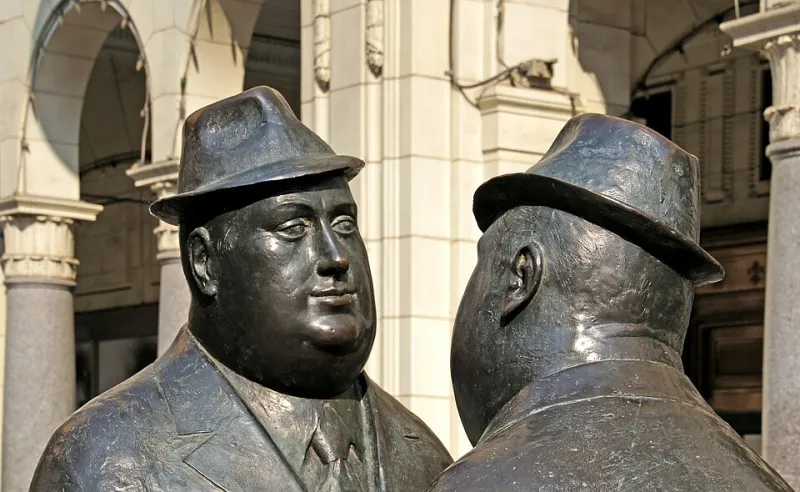
Photo: Photo taken by HKT3012, CC BY-SA 3.0, via Wikimedia Commons
Superstitions get a bad rap. We picture black cats and broken mirrors, irrational rituals with no logic at all. But trace most of them back far enough and you find something surprising: they used to make perfect sense.
Here are five habits millions of Americans perform on autopilot — and the practical reasons that started them.
Knocking on Wood Was a Refuge, Not a Ritual
Ask someone to "knock on wood" after saying something hopeful and they'll tap the nearest table without thinking. The popular explanation involves ancient spirits living in trees, and there may be something to that. But a more grounded origin points to religious refugees in earlier centuries: fleeing persecution, people knocked on trees to signal fellow believers hiding nearby. A knock meant "friend, it's safe." Over generations, the safety signal faded into a good-luck gesture — a way of not tempting fate after saying something out loud.
Blessing a Sneeze Was Once Public Health Policy
"God bless you" after a sneeze feels like pure politeness, but it began as something closer to triage. In sixth-century Europe, sneezing was one of the first symptoms of plague, and legend holds that the Pope urged people to bless anyone who sneezed — a small prayer for someone who might be days from death. Even after the plague faded, sneezes were still linked to serious illness, and the blessing stuck. Today we're essentially performing a 1,500-year-old wellness check, stripped of its reason.
Skipping Under Ladders Was Just... Sensible
The superstition says walking under a ladder brings bad luck. The truth is simpler: in earlier centuries, a ladder propped against a wall usually meant someone was working up top — a painter, a mason, a sailor aboard a ship where ladders and heavy rigging were everywhere. Walking beneath it risked a bucket of paint, a dropped tool, or worse. Some traditions also treated the ladder-and-wall triangle as a sacred shape, adding religious weight to what was already just good safety sense. The rule survived; the painters, mostly, didn't need the mythology.
Spilling Salt Became a Cleanup Ritual
Salt was once expensive enough to serve as currency, so spilling it genuinely hurt — a real financial misfortune, not a supernatural one. The "throw salt over your left shoulder" remedy is the younger superstition, but the underlying anxiety was practical: waste a valuable preservative and you'd pay for it. When salt became cheap, the fear outlived the price tag.
Covering Your Mouth at a Yawn Had a Reason
Parents scold kids for yawning without covering their mouths, and the habit traces back to eras when a wide-open yawn was seen as a way disease could enter or escape the body — a folk version of germ theory centuries before germs were understood. Like the sneeze blessing, it's hygiene advice wearing a costume of etiquette.
Why the Rules Outlived the Reasons
There's a pattern here. These weren't irrational beliefs — they were reasonable precautions wrapped in the language of luck, because for most of human history, that's how you got people to follow rules. "It's bad luck" is simply more memorable than a lecture on plague symptoms or falling paint buckets.
The reasons decayed; the habits hardened. And now a nation of skeptics knocks on desks, blesses sneezes, and walks around ladders — performing practical advice from centuries past, with no idea they're following the manual.