The Underground Cheese Mountains That Accidentally Created Modern Comfort Food
The Cheese Crisis Nobody Saw Coming
By 1981, the United States government had a problem that sounded like something out of a comedy sketch: it owned 560 million pounds of cheese and had nowhere to put it. The surplus was growing by 30 million pounds every month, and storage facilities were running out of space.
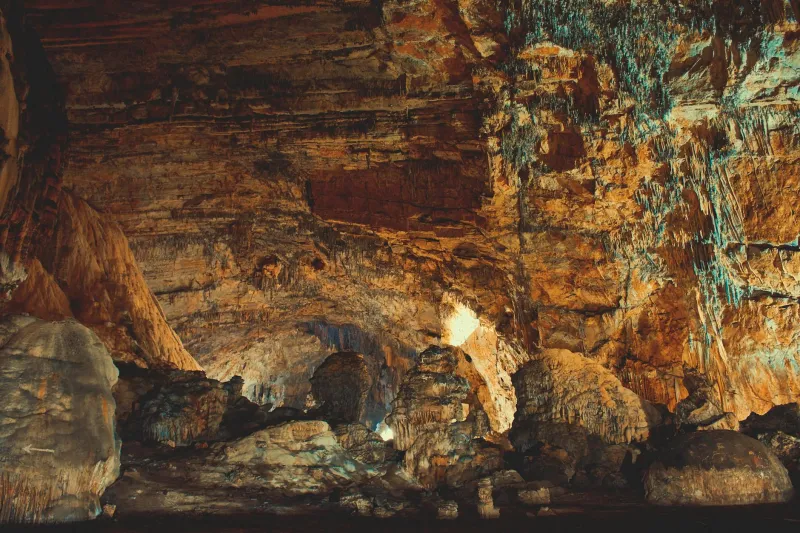
The solution was as bizarre as the problem itself. Deep beneath the rolling hills of Missouri, Kansas, and other states, the government began storing massive quantities of processed American cheese in abandoned limestone mines and purpose-built underground warehouses. These subterranean cheese caves maintained the perfect temperature and humidity for long-term storage, but they also created one of the strangest chapters in American food policy.
What nobody anticipated was how this agricultural emergency would fundamentally reshape American home cooking for decades to come.
How America Got Buried in Cheese
The cheese mountain didn't appear overnight. It was the unintended consequence of Cold War-era agricultural policies designed to support American dairy farmers and ensure food security during uncertain times.
Starting in the 1930s, the federal government had guaranteed to purchase surplus dairy products at fixed prices, protecting farmers from market fluctuations. The policy worked well for decades, with the government buying modest surpluses and distributing them through school lunch programs and food aid.
But in the 1970s, several factors converged to create a dairy disaster. Improved farming techniques and selective breeding dramatically increased milk production per cow. At the same time, changing American diets meant people were drinking less milk and eating less cheese than projected. The government found itself legally obligated to buy enormous quantities of dairy products that Americans simply weren't consuming.
By 1980, the situation had become absurd. The government was purchasing nearly 300 million pounds of cheese annually and paying millions in storage costs. The underground caves were filling up faster than anyone could figure out what to do with their contents.
The Great Cheese Giveaway
Faced with an impossible storage crisis and mounting political pressure, the Reagan administration made a decision that would influence American food culture in ways nobody predicted: they would give the cheese away.
 Photo: Reagan administration, via www.influencewatch.org
In 1981, the government launched the Temporary Emergency Food Assistance Program (TEFAP), distributing surplus commodities to food banks, soup kitchens, and directly to low-income families. The program's signature item was five-pound blocks of processed American cheese, wrapped in plain packaging that simply read "CHEESE" in block letters.
Millions of American families received these government cheese blocks throughout the 1980s and early 1990s. For many recipients, it was their primary source of protein and calcium. But the cheese came with a challenge: what do you do with five pounds of processed cheese?
The Accidental Culinary Revolution
Government cheese wasn't like the cheese most Americans were used to buying. It was dense, salty, and had an intense processed flavor that could overwhelm dishes if used incorrectly. But it also melted beautifully and had an incredibly long shelf life.
Families who received the cheese had to get creative. They developed techniques for incorporating it into everyday meals: shredding it into casseroles, melting it into sauces, and using it as the base for homemade macaroni and cheese that was richer and more intensely flavored than anything made with store-bought cheese.
These cooking techniques spread through communities and across generations. Children who grew up eating government cheese-based meals carried those flavor preferences and cooking methods into adulthood. The recipes that emerged from necessity became comfort food classics.
The Flavor That Defined a Generation
Government cheese had a distinctive taste that anyone who ate it remembers vividly. It was more intensely "cheesy" than regular processed cheese, with a sharp, almost tangy flavor that came from its high sodium content and specific aging process.
This flavor profile became the baseline for what many Americans expected cheese to taste like. When food manufacturers noticed that consumers preferred stronger, more processed cheese flavors, they began adjusting their formulations to match. The government cheese taste became a commercial standard.
You can trace this influence through the evolution of popular snack foods, frozen meals, and restaurant menu items from the 1980s onward. The bold, salty cheese flavors that became dominant in American food culture weren't accidental — they were shaped by the taste preferences of millions of people who had learned to associate that particular processed flavor with "good" cheese.
From Welfare Stigma to Culinary Nostalgia
Government cheese initially carried a social stigma. Recipients often felt embarrassed about needing food assistance, and the plain packaging made the cheese's origins obvious to anyone who saw it. But over time, something interesting happened: the stigma transformed into nostalgia.
As the children who grew up eating government cheese became adults, many looked back fondly on the meals their parents created with it. Food blogs and social media are filled with people trying to recreate the specific taste and texture of government cheese dishes from their childhood.
This nostalgia has even influenced high-end dining. Several prominent chefs have created upscale versions of government cheese-inspired dishes, celebrating the resourcefulness and creativity that families showed when working with limited ingredients.
The Modern Legacy
The government cheese program officially ended in the mid-1990s, but its influence on American food culture continues. The techniques that families developed for using processed cheese in large quantities became standard approaches to comfort food cooking.
Many of today's most popular comfort food trends — from gourmet grilled cheese sandwiches to artisanal mac and cheese — can trace their flavor profiles back to the government cheese era. Even high-end restaurants now serve dishes that deliberately evoke the intense, processed cheese flavors that defined 1980s home cooking.
The program also influenced how Americans think about food assistance. The success of distributing surplus commodities led to expanded food bank networks and commodity distribution programs that continue today.
The Caves That Changed Everything
Those underground cheese caves still exist, though they're no longer filled with government surplus. Many have been converted to commercial storage facilities for private companies, while others house everything from business records to classic cars.
But their legacy lives on in American kitchens. Every time someone makes an extra-cheesy casserole or reaches for processed cheese instead of fresh, they're participating in a food culture that was fundamentally shaped by a Cold War policy gone wrong and the creative families who figured out how to turn a government surplus into comfort food gold.
The story of government cheese proves that some of the most lasting cultural changes come from the most unexpected places — even from the bottom of a limestone cave in Missouri, where millions of pounds of processed cheese accidentally rewrote the American comfort food playbook.