Machines Have Been Fixing Your Spelling Longer Than You've Been Typing
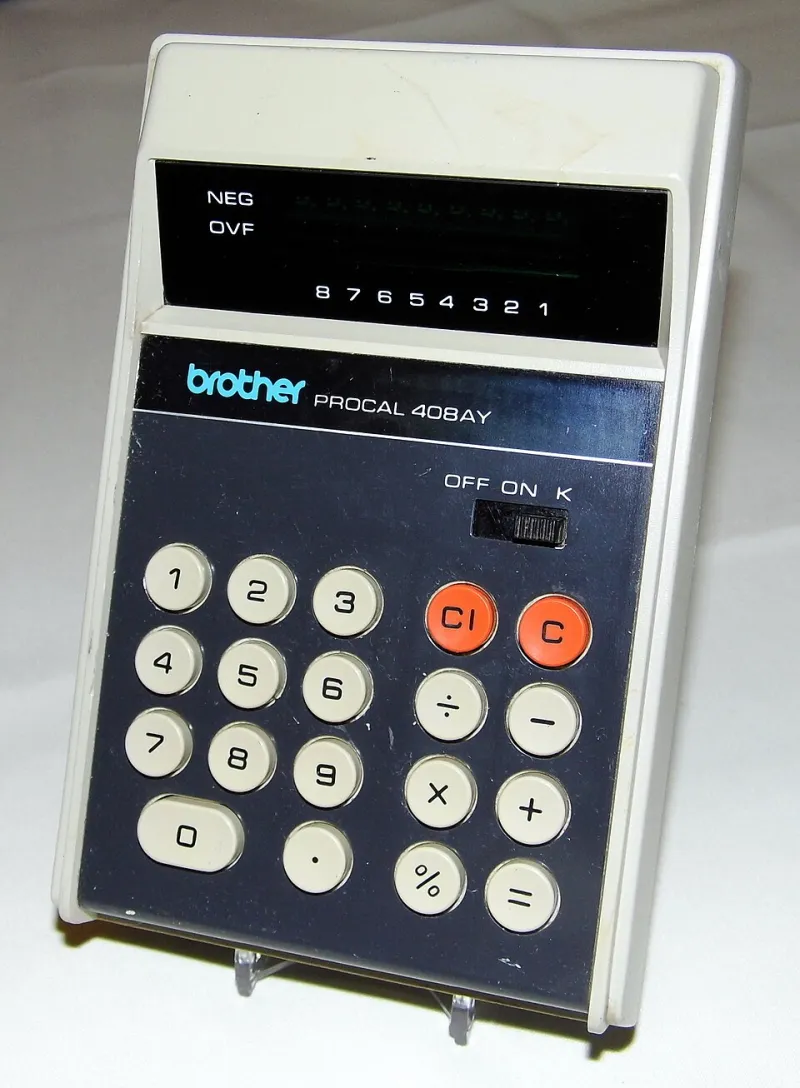
Photo: Joe Haupt from USA, CC BY-SA 2.0, via Wikimedia Commons
You typed "teh" and your phone showed "the." You didn't think about it. Nobody does anymore. Autocorrect is so woven into daily life that most Americans under 40 have never composed a text without it. But the idea that a machine should quietly fix your writing is far older than the smartphone — it goes back to an era of clacking keys, carbon paper, and a Bell Labs engineer with an unusual obsession: collecting misspellings.
The Typewriter's Apology Buttons
The typewriter, for all its romance, made mistakes permanent. Ink on paper doesn't forgive. So inventors spent decades building forgiveness machines of their own. There were devices that let typists backspace and overstrike, ribbons designed for correction fluid, and by the 1970s, the IBM Selectric with its magnetic tape "memory" that could rewind and retype a corrected line.
These weren't spellcheckers, exactly. They were mechanical apologies — tools whose entire purpose was to pretend an error never happened. That philosophy, hide the mistake rather than confess it, would become the blueprint for everything that followed.
The Garbage Key Era
When word processors arrived in the late 1970s and early '80s, error correction went digital but stayed clumsy. Early systems relied on what one engineer reportedly called "garbage keys" — dedicated buttons that would erase whatever garbled string you'd just typed. The machine couldn't tell you what was wrong; it could only let you nuke it and start over.
The leap to real correction required something the hardware didn't have yet: a brain full of words.
The Bell Labs Word Hoard
That brain started taking shape at Bell Labs in the 1970s, where researchers built some of the earliest computerized spelling databases — enormous lists of correctly spelled words paired with algorithms for spotting strings that didn't match. One key insight emerged: most errors aren't random. People misspell words in predictable ways, swapping adjacent letters, doubling the wrong consonants, transposing characters. If you could model the kinds of mistakes people make, you could guess what they meant to type.
That idea — prediction based on error patterns — is the direct ancestor of both spellcheck and autocorrect. The red squiggle in Microsoft Word, introduced to the mainstream in the 1990s, and the auto-replacing text field on the 2000s-era smartphone are the same core concept wearing different clothes.
How It Changed the Way We Write
Here's where the story gets interesting. Error correction was designed to be invisible — a tool that catches mistakes so you can think about ideas instead of letters. But invisibility cuts both ways. Generations of Americans have now learned spelling partly through the machine, absorbing corrections without ever memorizing rules. Autocorrect's infamous misfires became a cultural phenomenon of their own, a running joke about what happens when a machine's best guess goes confidently wrong.
And linguists will tell you the tool has changed our relationship with language itself. When correction is instant and automatic, the anxiety that made people careful spellers for a century simply fades. The machine remembers the dictionary so we don't have to.
The Mistake Machine That Never Sleeps
The through-line from the Selectric's memory tape to the phone in your pocket is a single, surprisingly radical idea: that a machine can know what you meant better than what you said. It started as a mechanical courtesy for typists and became one of the most influential software features ever shipped.
Every time your phone silently fixes a typo in a three-word text, you're using the end point of a hundred-year project — humanity teaching its machines to be forgiving. Mostly. Usually. (We still see you, "ducking.")