One Engraving Changed How 330 Million Americans Celebrate Christmas

Every December, millions of Americans haul a tree — real or artificial — into their living room, string it with lights, and hang ornaments that have been in the family for decades. The ritual feels ancient. It feels inevitable. It feels like something that has simply always been part of what Christmas means in this country.
It wasn't. And the story of how it got here involves a British queen, a German prince, a magazine illustration, and a railroad industry looking for something new to ship.
Christmas Before the Tree
For most of American history, Christmas looked nothing like it does today. Colonial celebrations were often rowdy, alcohol-fueled affairs that bore more resemblance to Mardi Gras than to a quiet family gathering around a decorated spruce. The Puritans of New England actively banned Christmas observance for a period, considering it a pagan holdover with no scriptural basis. In the South, the holiday was more festive but still largely unstructured — a season of visiting, eating, and communal gathering rather than a set of specific domestic rituals.
The idea of bringing a tree indoors and decorating it was genuinely foreign to most Americans through the first half of the nineteenth century. German immigrants in Pennsylvania had carried the tradition with them from Europe, and it existed in certain communities — but it was understood as an ethnic custom, something the German families did, not a universal American practice. Many Anglo-American households viewed the decorated indoor tree with mild suspicion, the way any unfamiliar foreign tradition tends to be received.
Christmas was observed, but it didn't have a unified visual language yet. That was about to change, and the catalyst would come from across the Atlantic.
The Illustration That Traveled Faster Than Anyone Expected
In December 1848, the Illustrated London News published an engraving of Queen Victoria, Prince Albert, and their children gathered around a decorated Christmas tree at Windsor Castle. The image was warm, domestic, and unmistakably aspirational — here was the most famous royal family in the world, celebrating the holiday in a specific, picturesque way.
 Photo: Windsor Castle, via mediaim.expedia.com
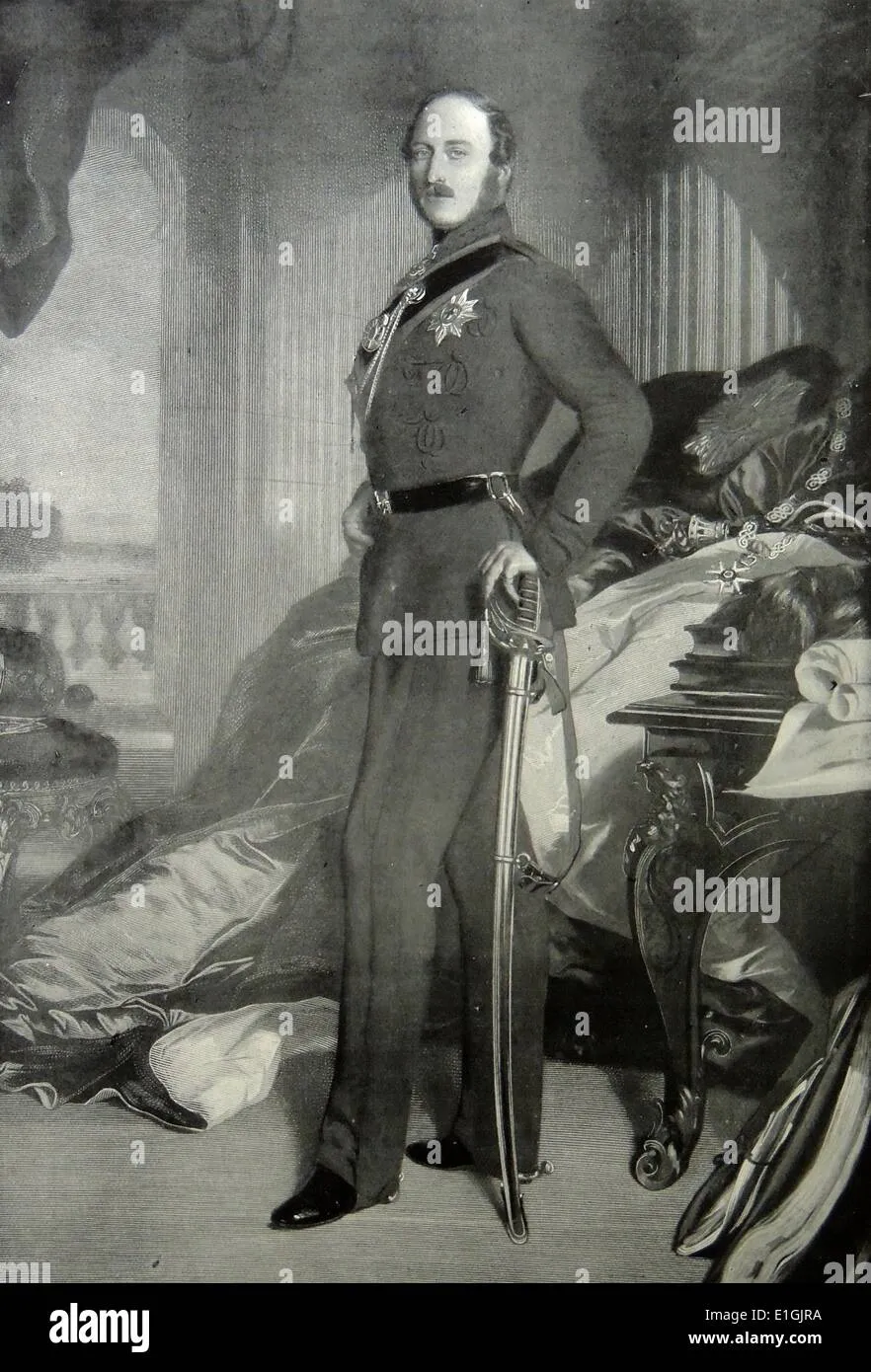 Photo: Prince Albert, via c8.alamy.com
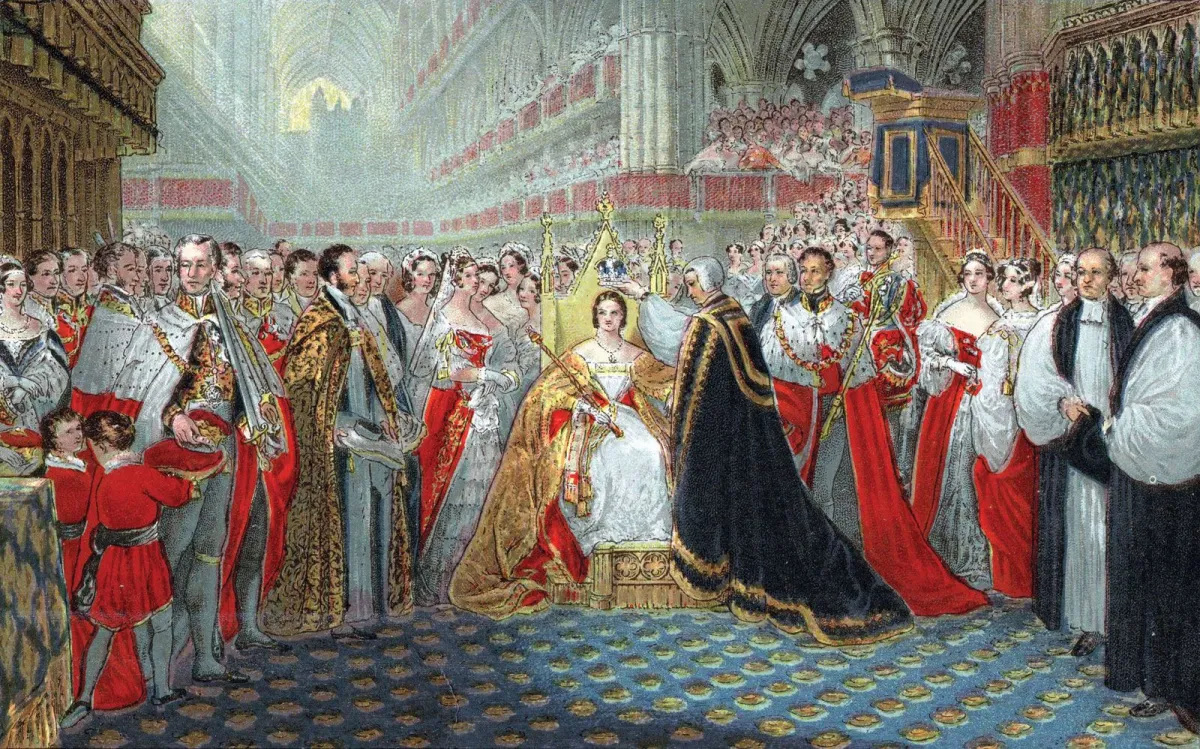 Photo: Queen Victoria, via cdn.britannica.com
Prince Albert was German, and the Christmas tree was part of his cultural heritage. He had introduced the tradition to the royal household years earlier. But when that image was published and began circulating, readers didn't see it as a German custom. They saw it as what royalty did — and therefore what tasteful, respectable, modern families did.
Two years later, in 1850, Godey's Lady's Book — one of the most widely read magazines in the United States — republished the illustration. They made one significant edit: they removed the royal regalia from Victoria and Albert, replacing them with figures that looked like ordinary, well-dressed American parents. The message was now explicit. This wasn't something a queen did. This was something your family could do.
Godey's had an enormous readership among middle-class American women, the people who made most household decisions about how domestic life was organized and what holidays looked like. The illustration spread through that readership like a rumor — passed between neighbors, discussed in parlors, cut out and pinned up in homes across the country.
The Railroads Were Ready
The image created desire. American industry was ready to fulfill it.
By the 1850s and 1860s, the railroad network was expanding rapidly, and with it came the ability to ship perishable goods — like freshly cut trees — over distances that would have been impossible a generation earlier. Commercial nurseries and timber operations in the Northeast recognized an opportunity almost immediately. If American families wanted trees, they could supply trees. And supply them they did, at scale.
What had previously required a family to go into the woods themselves and cut something down became a purchasable commodity. Trees appeared in city markets. Vendors set up on street corners. The transaction was simple and the product was suddenly everywhere — which reinforced the sense that this was simply what people did at Christmas, because everywhere you looked, that appeared to be exactly what was happening.
The ornament industry followed. Tinsel, glass baubles, candles, and eventually electric lights all emerged to fill the newly created demand for tree decoration. Each product category reinforced the ritual, and the ritual reinforced the demand for each product category.
Tradition Manufactured in Real Time
What's remarkable about the American Christmas tree tradition is how quickly it achieved the feeling of permanence. Within roughly two generations of that Godey's illustration, the decorated indoor tree had gone from a foreign curiosity to an unquestioned cornerstone of American holiday identity. By the early twentieth century, it was difficult to find anyone who remembered a time before it — or who thought to question where it had come from.
This is how many traditions actually work. They don't emerge slowly from some deep cultural root. They arrive quickly, get commercialized efficiently, and then age into the appearance of inevitability. The Christmas tree felt ancient by 1910 because nobody alive in 1910 could personally remember 1848.
The Engraving You'll Never See Under the Tree
This December, somewhere in America, a family will stand back and look at their decorated tree and feel the specific emotional weight of a ritual that seems to reach back through time. They won't think about a British magazine or a German prince or a railroad company looking to move product through the winter months.
They'll just think it's Christmas. And in a way, that's the most impressive part of the whole story — that an image, a commercial opportunity, and a single well-timed cultural moment combined to create something that now feels like it was always there, waiting for us, as natural and inevitable as the season itself.