Red Light, Green Light: The Signal System That Grew Out of the Railroad
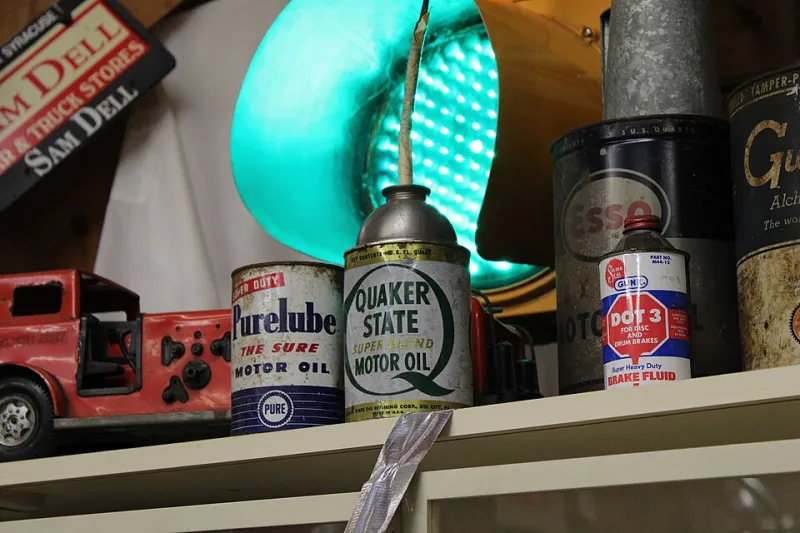
Photo: DogsRNice, CC BY-SA 4.0, via Wikimedia Commons
Every American driver obeys a color code within seconds of getting behind the wheel. Red means stop. Green means go. It feels as natural as gravity.
It isn't. It's railroad equipment, adapted for the street.
Before the Lights, There Was Chaos
In the early 1900s, American city streets were bedlam. Cars, streetcars, horse-drawn wagons, bicycles, and pedestrians all competed for the same pavement with almost no rules. Police officers stood on boxes in the middle of intersections and directed traffic by hand — when they could be spared.
The results were grim. Vehicle fatalities climbed year after year as car ownership exploded, and city governments faced mounting pressure to do something. But what?
Cleveland found the answer where most cities of that era found engineering answers: the railroad.
The Railroad Had Already Solved It
Railroads had spent decades perfecting a signaling language. Trains running on shared tracks couldn't exactly swerve around each other, so the industry developed a system of colored lanterns and semaphore arms to tell engineers when to proceed, slow down, or halt. Red meant danger. Green meant clear.
In August 1914, the city of Cleveland installed an electric traffic signal at East 105th Street and Euclid Avenue — one of the busiest corners in town. The device, designed by inventor James Hoge, used lights wired to a control booth and was, in essence, a railroad signal transplanted to an intersection. Police operated it manually at first, flipping between stop and go as traffic demanded.
It worked. And it spread.
Why Red? Why Green?
The color choices weren't arbitrary — they came straight from railway practice, and railway practice came from physics.
Red light has the longest wavelength of visible light, which means it scatters less in fog, rain, and dust. A red signal stays visible at distances where other colors wash out. For a railroad switch operator watching a train barrel through the fog, that reliability could mean the difference between life and a catastrophe. Red was reserved for "stop" and stayed reserved.
Green, meanwhile, had long been used by railroads for "proceed with caution," and it eventually shifted into the universal "go." (Fun wrinkle: early signals sometimes used white lights instead of green, until engineers realized a bright white light could be confused with an ordinary streetlamp or a star — a genuinely dangerous ambiguity that pushed the industry firmly toward green.)
The Yellow Light Was an Afterthought
The original signals were a two-state world: stop and go. The amber light in the middle — now so essential that kids sing about it — came later, added as traffic volumes grew and drivers needed a warning between the two states. Three-light signals became standard across the country through the 1920s, and by the time the Federal government codified uniform traffic rules, the railroad-born palette was law of the land.
A Century of Obedience
Today there are tens of thousands of signalized intersections in the United States, and the system is so ingrained that it shapes everything from driver's ed curricula to children's games. We inherited the whole thing — colors, logic, and all — from an industry that never had to worry about pedestrians, adapted by cities desperate to stop the carnage.
So the next time you coast to a stop at a red light, consider the lineage: you're not following a rule some traffic engineer invented for your sedan. You're answering a signal meant, a century ago, for a locomotive engineer watching the rails ahead.