The Farm Boy's Blackboard Sketch That Rewired How America Spent Saturday Mornings
The Teenager Who Saw the Future in Farm Rows
Philo Taylor Farnsworth was plowing his family's potato field in Rigby, Idaho, when he had an idea that would change American life forever. The 14-year-old farm boy looked at the neat, parallel rows he was creating and suddenly understood how to transmit moving pictures through the air. That moment in 1921 would eventually put a television in nearly every American home.
 Photo: Rigby, Idaho, via saltproject.co
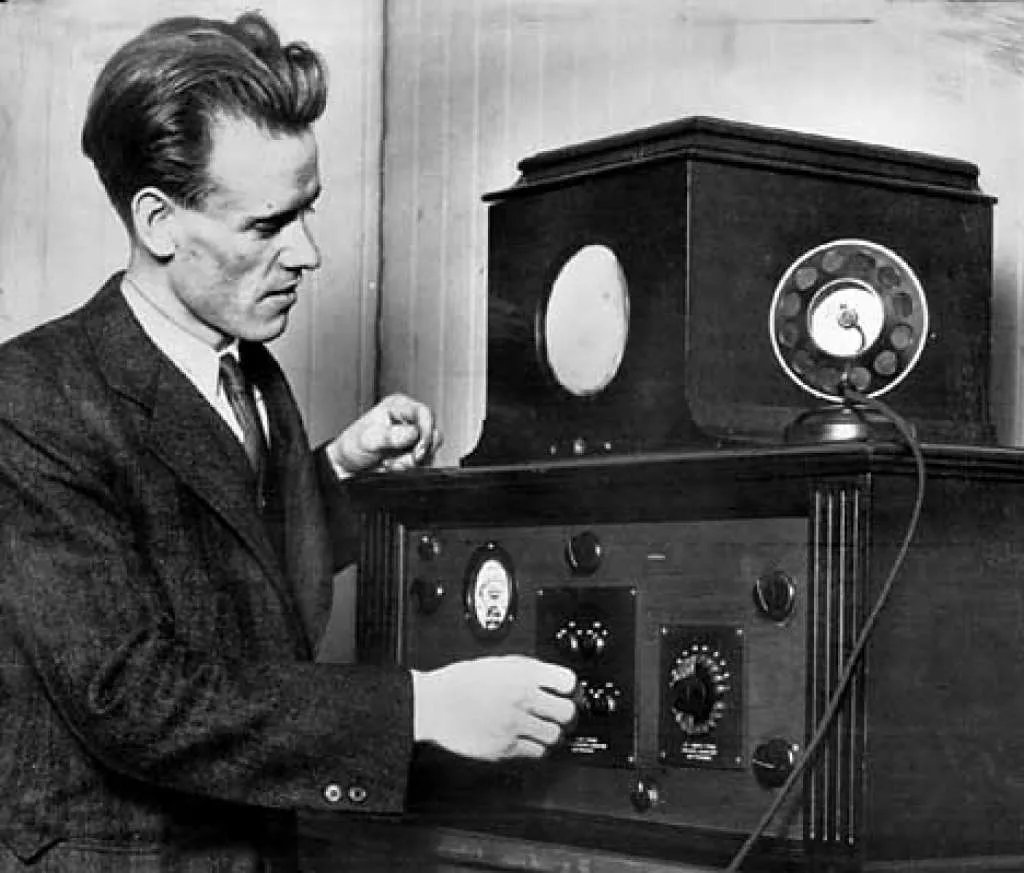 Photo: Philo Taylor Farnsworth, via images.squarespace-cdn.com
But Farnsworth's teenage breakthrough almost didn't matter. The technology he sketched on his high school blackboard — explaining how electron beams could scan images line by line, just like plowing a field — would spend decades caught up in corporate patent battles before it accidentally became America's favorite babysitter.
From War Technology to Living Room Furniture
The cathode ray tube that made television possible wasn't originally designed for entertainment. During World War II, similar technology powered radar systems that helped Allied forces track enemy aircraft and ships. Engineers working on military applications had no idea they were developing the foundation for Saturday morning cartoons.
When soldiers returned home after 1945, they brought with them a hunger for normalcy and domestic comfort. The same technology that had helped win the war was quietly being repurposed by companies like RCA into something that promised to bring the world into American living rooms.
The Boxing Match That Changed Everything
Television might have remained an expensive curiosity if not for a single broadcast on June 19, 1948. The heavyweight championship fight between Joe Louis and Jersey Joe Walcott was televised live, and for the first time, Americans gathered in bars, appliance stores, and neighbors' homes to watch the same event simultaneously.
 Photo: Joe Louis, via www.myblackhistory.net
That fight demonstrated television's unique power: it could create shared national experiences in real time. Unlike radio, movies, or newspapers, TV made distant events feel immediate and communal. Americans who watched that fight suddenly understood what they'd been missing.
RCA's Patent War Strategy
Behind the scenes, RCA was fighting a different kind of battle. The company had spent years acquiring television-related patents, including crucial ones from Farnsworth, to control the emerging industry. Their strategy was simple: make it nearly impossible for competitors to manufacture televisions without paying RCA licensing fees.
This corporate maneuvering had an unexpected consequence. By controlling television manufacturing, RCA could flood the market with affordable sets once they decided the time was right. When they finally pushed television into mass production around 1948, prices dropped fast enough to make TV ownership feel achievable for middle-class families.
The Suburban Revolution Nobody Planned
The timing couldn't have been more perfect. Post-war America was experiencing massive suburban growth, fueled by GI Bill benefits and federally-backed mortgages. Millions of families were moving into new homes that needed furniture, appliances, and entertainment.
Television filled a gap that nobody had articulated before it existed. Suburban families, often isolated from extended family and urban entertainment options, suddenly had a window into the wider world. TV programming evolved to serve this audience: variety shows, family sitcoms, and children's programming that kept kids entertained while parents handled household tasks.
Saturday Mornings Become Sacred
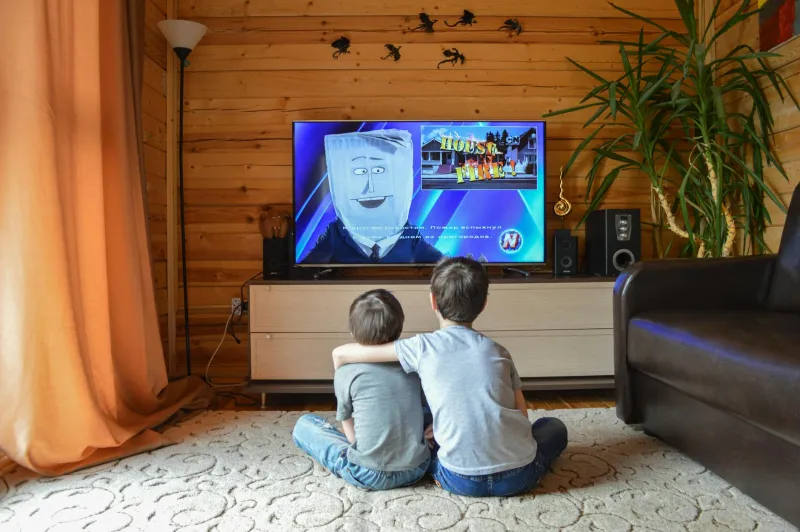
By the early 1950s, television had accidentally created a new American ritual: Saturday morning cartoons. Networks discovered that children's programming could capture young audiences for hours, giving parents a break while building lifelong viewing habits.
What started as cheap programming filler — animation was less expensive than live-action shows — became a cultural institution. Saturday mornings transformed from family chore time into a shared national experience for American children. Parents who had grown up without television suddenly found themselves negotiating screen time and cartoon schedules.
From Military Innovation to Family Time
The journey from Farnsworth's farm field inspiration to suburban living room centerpiece reveals how technologies develop in unexpected directions. The teenager who solved television's technical challenges couldn't have predicted that his invention would reshape American domestic life.
The military applications that funded early television development had nothing to do with entertainment. The corporate patent battles that determined which companies could manufacture TVs weren't fought with families in mind. Even the programming that made television compelling emerged from practical considerations like production costs and scheduling needs.
The Babysitter Nobody Planned
Yet somehow, all these unrelated factors combined to create something unprecedented: a device that could occupy children's attention for hours while providing adults with news, entertainment, and shared cultural experiences. Television became America's electronic babysitter not through careful planning, but through a series of technological, economic, and social coincidences.
Farnsworth's farm boy insight about scanning images line by line had evolved into something that fundamentally changed how American families spent time together. The same technology that helped win World War II was now mediating between parents and children, creating new forms of shared entertainment and, occasionally, family conflict over what to watch.
The Accidental Revolution
Today, when streaming services and mobile devices have fragmented the shared viewing experience that defined early television, it's easy to forget how revolutionary that original technology was. A teenager's observation about plowing fields efficiently led to a device that could transmit moving pictures across continents, and that device accidentally became the organizing principle for American family leisure time.
Philo Farnsworth probably never imagined that his solution to the technical challenge of electronic image transmission would eventually determine when American children woke up on Saturday mornings, or that parents would rely on his invention to keep kids entertained while they caught up on household tasks. But that's exactly what happened, proving once again that the most transformative technologies often end up serving purposes their inventors never intended.