Before Alarm Clocks, Americans Paid Strangers to Bang on Their Windows at Dawn
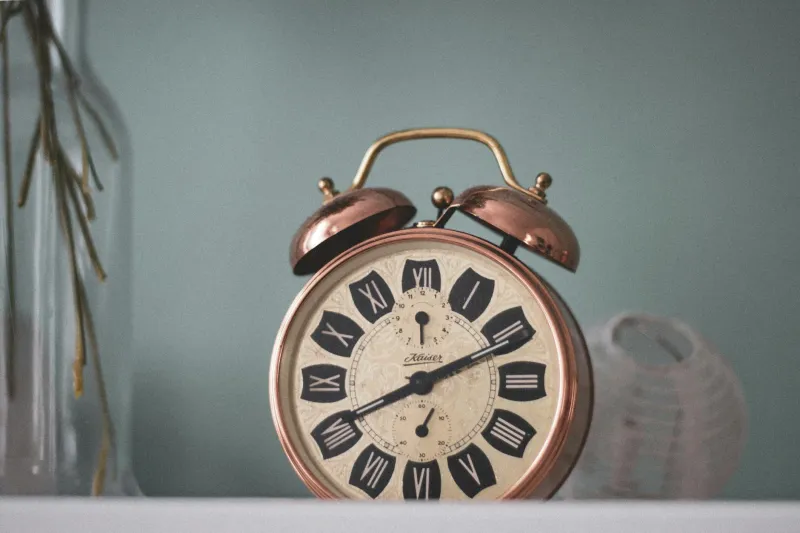
Every morning, millions of Americans wake up to the jarring sound of an alarm clock. But for most of human history, that annoying beep didn't exist. Instead, people relied on a profession that sounds like something out of a Dickens novel: professional wake-up callers who tapped on windows with long sticks.
The Original Human Alarm System
Before the 1880s, most working Americans who needed to wake up at specific times had three options: pay a "knocker-upper," hope the rooster cooperated, or simply stay awake all night. In industrial cities like Boston, New York, and Chicago, knocker-uppers made decent livings walking predetermined routes at dawn, tapping on customers' windows with bamboo poles or shooting peas at glass panes.
These human alarm clocks charged about 25 cents per week — roughly equivalent to $8 today. Factory workers, shopkeepers, and anyone else who couldn't afford to oversleep relied on them completely. The system worked, but it had obvious limitations. Knocker-uppers occasionally overslept themselves, got sick, or simply forgot routes during bad weather.
Wealthy families owned large mechanical clocks, but these were expensive, temperamental devices that required daily winding and frequent repairs. A good household clock cost the equivalent of several thousand dollars in today's money — far beyond what most Americans could afford.
The Connecticut Clockmaker's Cost-Cutting Revolution
The breakthrough came from an unlikely source: Chauncey Jerome, a Connecticut clockmaker who was going broke trying to compete with expensive European timepieces. In 1838, Jerome's factory was struggling to stay afloat when he stumbled onto a manufacturing insight that would accidentally democratize timekeeping.
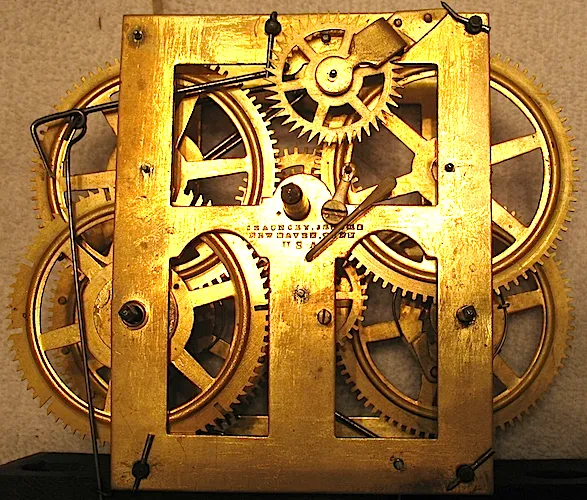 Photo: Chauncey Jerome, via jeromeclockcollector.com
Jerome discovered that using brass movements instead of wood made clocks more accurate and durable, but more importantly, brass components could be mass-produced using standardized machinery. His factory could suddenly manufacture thousands of identical clock movements at a fraction of the previous cost.
By the 1850s, Jerome's innovations had inspired dozens of Connecticut clockmakers to adopt similar mass-production techniques. The region became America's clockmaking capital, churning out affordable timepieces that ordinary families could actually buy.
The Alarm Attachment That Changed Everything
The final piece fell into place in the 1870s when clockmakers began adding simple alarm mechanisms to their standard designs. These weren't sophisticated devices — just additional gears that would release a hammer to strike a bell at a predetermined time. But they worked reliably and added only a few dollars to a clock's price.
Suddenly, for less than $5 (about $120 today), any American worker could own a personal wake-up system. No more paying knocker-uppers, no more depending on unreliable roosters, no more anxiety about oversleeping. The mechanical alarm clock put time control directly in individual hands.
The Unintended Social Revolution
What happened next surprised everyone, including the clockmakers themselves. Cheap alarm clocks didn't just change how Americans woke up — they fundamentally altered how Americans thought about personal responsibility and time management.
Before alarm clocks, being late for work often meant blaming your knocker-upper or claiming your rooster was sick. These excuses were socially acceptable because wake-up systems were genuinely unreliable. But once every worker could afford a mechanical alarm, lateness became a personal failing rather than an external circumstance.
Employers quickly caught on. Factory bosses who had previously tolerated occasional tardiness began implementing strict punctuality policies. "No excuse for being late" became a common workplace motto because, for the first time in history, there really wasn't a good excuse.
The Bedside Table Revolution
The alarm clock also accidentally created new furniture needs. Traditional large clocks sat on mantels or hung on walls, but personal alarm clocks needed to be within arm's reach of sleeping people. This drove demand for bedside tables, nightstands, and bedroom furniture designed around individual timekeeping needs.
American furniture makers responded by developing smaller, more intimate bedroom layouts. The "master bedroom suite" concept — with matching nightstands flanking a bed — emerged partly because couples each wanted their own alarm clock access.
When Time Became Personal Property
By 1900, alarm clocks had become so ubiquitous that knocker-uppers had virtually disappeared from American cities. The last professional window-tapper in Boston reportedly retired in 1912, unable to compete with 75-cent alarm clocks sold at Sears.
This shift represented something profound: the privatization of time awareness. For thousands of years, knowing when to wake up had been a community responsibility shared among neighbors, employers, and professional services. Alarm clocks made timekeeping intensely personal and individual.
The Ticking Legacy
Today, most Americans wake up to digital alarms on smartphones, but the underlying principle remains unchanged. We still expect individuals to manage their own wake-up times, we still consider punctuality a personal virtue, and we still organize bedrooms around nightstand-accessible timekeeping devices.
That annoying morning beep isn't just waking you up — it's continuing a 150-year-old tradition of personal time management that accidentally emerged from a Connecticut clockmaker's cost-cutting experiments. Every time you hit the snooze button, you're exercising a form of individual control over time that your great-great-grandparents couldn't have imagined.
The alarm clock didn't just change when Americans woke up. It changed who was responsible for making sure they did.