The Rigged Games That Accidentally Built America's Cuddly Empire
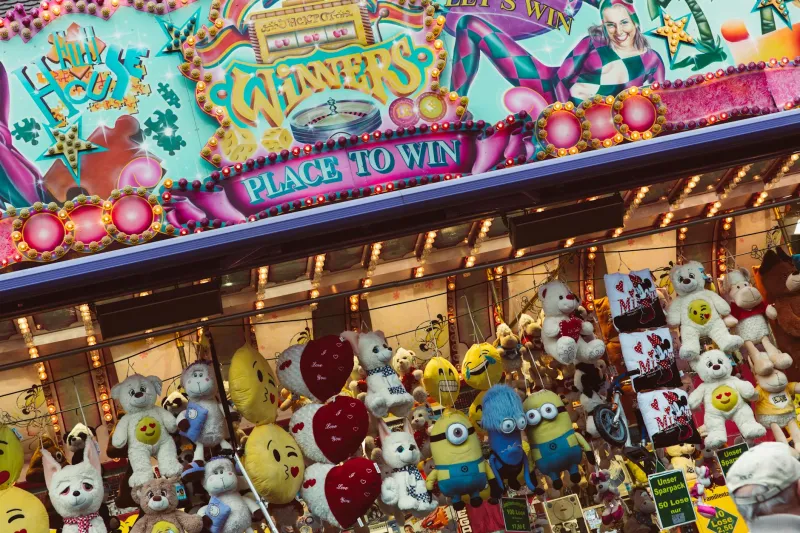
The Economics of Almost Winning
In 1885, carnival operators faced a peculiar business problem. Their ring-toss games and balloon darts needed prizes impressive enough to draw crowds but cheap enough that giving them away wouldn't bankrupt the operation. The solution seemed impossible: create items that looked valuable but cost almost nothing to produce.
Enter a small network of toy manufacturers who specialized in what the trade called "carnival premiums." These weren't toys in any traditional sense—they were props in an elaborate theater of near-victory, designed specifically to hang from carnival tent poles and make losing feel almost like winning.
What nobody expected was that these fake prizes would accidentally create the template for America's entire stuffed animal industry.
The Science of Carnival Bait
Carnival prize manufacturers faced unique constraints that had never existed in toy-making before. Their products needed to be:
- Visually impressive from 20 feet away
- Light enough to ship in massive quantities
- Cheap enough to wholesale for under 15 cents
- Durable enough to hang outdoors for weeks
- Large enough to justify the 50-cent game fee
Traditional toys failed every test. Wooden toys were too heavy and expensive. Metal toys rusted. Dolls with porcelain heads shattered during transport. But a new material called "plush"—cotton batting covered in cheap synthetic fur—seemed to solve every problem at once.
Manufacturers discovered they could create enormous stuffed animals using minimal materials. A three-foot-tall bear required only a few cents worth of batting and fabric, but looked like a premium prize when hanging from carnival rafters. Better yet, the soft construction meant dozens could be packed into shipping crates without damage.
The Carnival-Industrial Complex
By 1900, a handful of companies had built their entire business model around carnival economics. The Knickerbocker Toy Company in New York became the largest manufacturer of "amusement premiums" in America, producing over 100,000 stuffed animals annually for traveling shows.
 Photo: New York, via www.worldtravelimages.net
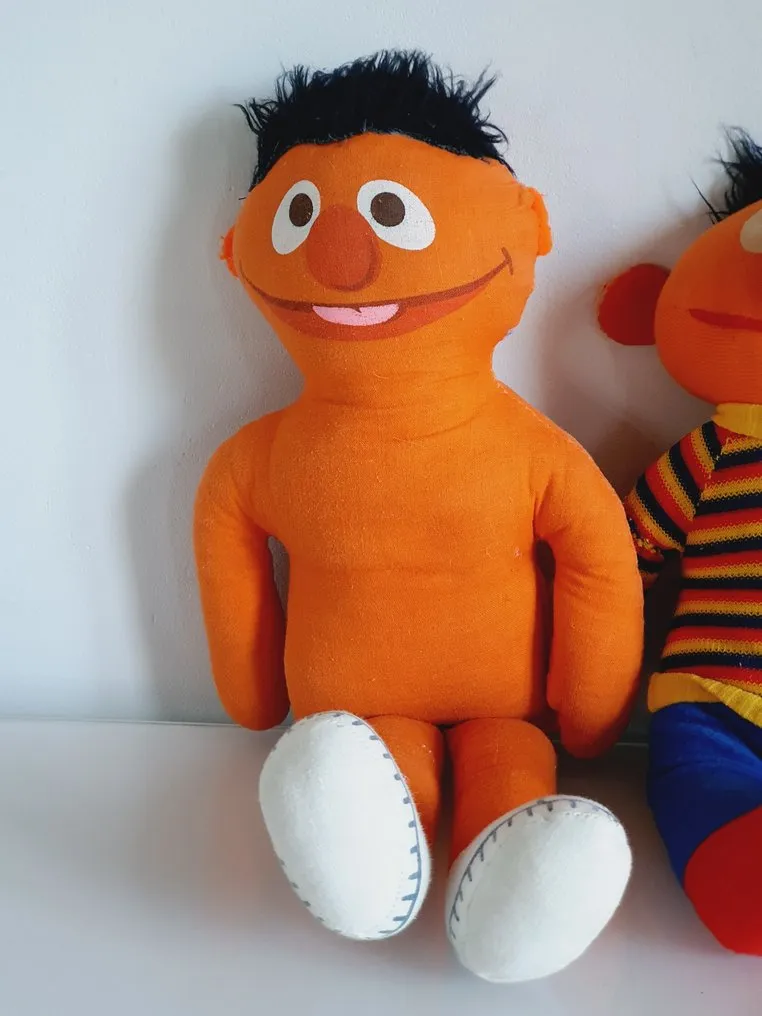 Photo: Knickerbocker Toy Company, via assets.catawiki.com
Their designs were specifically engineered for carnival psychology. Animals were made oversized to look more valuable than they were. Colors were deliberately garish—bright pinks, electric blues, unnatural purples—because they showed up better under carnival lights. Eyes were painted large and appealing because carnival operators had discovered that prizes with "cute" faces drew more players.
Most importantly, the animals were designed to be almost impossible to win. Carnival games were carefully rigged, with success rates typically under 5%. The stuffed animals weren't really prizes—they were advertisements for an experience that players would almost certainly lose.
From Midway to Main Street
The transformation began around 1910, when department stores started noticing something odd. Customers were asking for toys that looked like carnival prizes—specifically, those large, soft, colorful stuffed animals they'd seen at traveling shows. Store buyers initially resisted, assuming the gaudy carnival aesthetic wouldn't work in respectable retail environments.
They were wrong. Children who had visited carnivals begged their parents for animals "like the big bear at the fair." The carnival manufacturers had accidentally discovered that kids preferred their exaggerated, colorful designs to traditional toy animals. More importantly, parents discovered that large stuffed animals were relatively inexpensive compared to mechanical toys or dollhouses.
By 1920, former carnival prize manufacturers had become mainstream toy companies. Knickerbocker Toy launched their first retail line of stuffed animals, using the exact same designs and manufacturing techniques they'd developed for rigged ring-toss games.
The Teddy Bear Revolution
The carnival influence became most obvious with the teddy bear craze that began in 1903. While the political origin story involving President Roosevelt is well-known, the actual design and manufacturing of teddy bears was entirely shaped by carnival economics.
The first commercial teddy bears were produced by companies that had spent decades making carnival prizes. They used the same oversized proportions, the same cheap plush materials, and the same exaggerated facial features that had proven effective at traveling shows. The "cute" aesthetic that we now consider natural for children's toys was actually engineered to catch the eye of carnival gamblers.
Even the standard sizes of teddy bears—small, medium, and large—directly corresponded to carnival prize tiers. Different games awarded different sized animals based on their difficulty and cost to operate.
The Unintended Consequences of Rigged Games
Today, the global stuffed animal industry generates over $7 billion annually, and virtually every design principle can be traced back to those original carnival manufacturers. The oversized heads, bright colors, soft textures, and emotional appeal that define modern plush toys were all innovations driven by the need to create effective bait for rigged games.
Walk through any toy store today and you're seeing the legacy of 19th-century carnival economics. Those enormous teddy bears, the rainbow-colored unicorns, the impossibly cute puppies—they're all descendants of props designed to separate farmers from their nickels at county fairs.
The irony is perfect: an industry built on disappointment accidentally created one of childhood's greatest sources of comfort. Those carnival operators never intended to make children happy—they were trying to make adults lose money. But in engineering the perfect bait for rigged games, they stumbled onto something deeper about human psychology and the appeal of soft, oversized, colorful companions.
Every child who falls asleep clutching a stuffed animal is benefiting from innovations pioneered by people whose job was to ensure that almost nobody ever won the prize. The carnival might have been rigged, but the toys it created turned out to be exactly what America's children actually wanted.