The Chocolate Bar That Launched a Kitchen Revolution Nobody Asked For
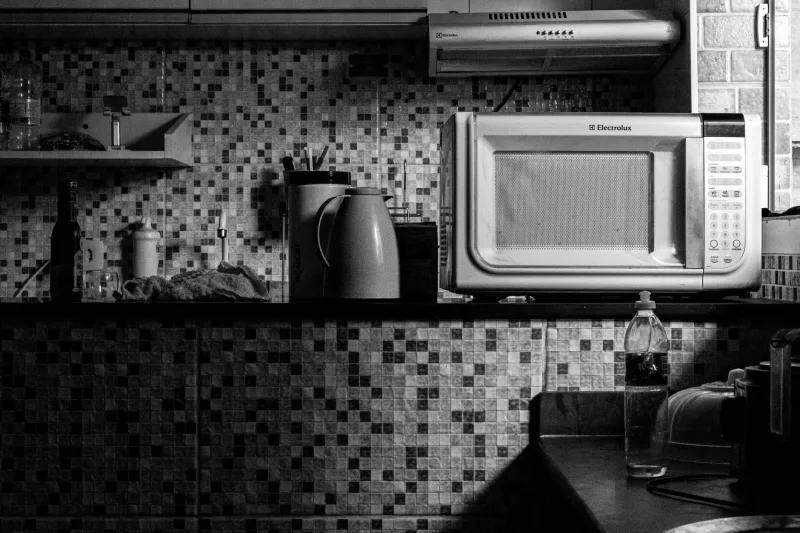
You've probably reheated leftovers in a microwave today without giving it a second thought. But the appliance humming quietly on your countertop exists because of a melted candy bar, a skeptical corporation, and decades of stubborn persistence from people who couldn't convince anyone that cooking with radar waves was a good idea.
It's one of those origin stories that sounds made up — until you dig into the details.
The Accident That Started Everything
Percy Spencer wasn't supposed to be an inventor. He was a self-educated engineer from rural Maine who'd taught himself electrical engineering while working at a naval radio station in his teens. By 1945, he was a senior researcher at Raytheon, the Massachusetts defense contractor, spending his days working with magnetrons — the high-powered vacuum tubes that generated the microwave radiation used in wartime radar systems.
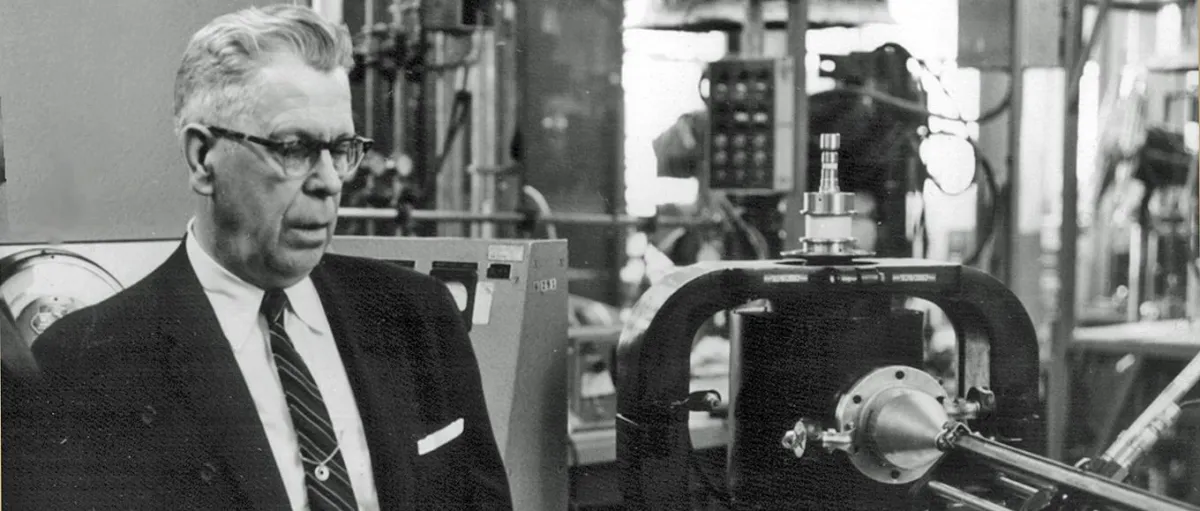 Photo: Percy Spencer, via www.massmoments.org
One afternoon in 1945, Spencer was standing near an active magnetron when he noticed something odd. The chocolate bar in his shirt pocket had melted into a soft, gooey mess. He hadn't been near a heat source. The equipment wasn't running hot. The only thing different was the invisible microwave energy radiating from the device in front of him.
A less curious person might have been annoyed about the ruined candy and moved on. Spencer started asking questions.
He began running informal experiments, positioning different foods near the magnetron to see what happened. Popcorn kernels popped. An egg exploded — famously, right in the face of a colleague who leaned in too close. Within weeks, Spencer had filed a patent for a method of cooking food using microwave radiation. He was convinced he'd stumbled onto something significant.
Raytheon's executives were considerably less enthusiastic.
The $50,000 Machine Nobody Wanted in Their Kitchen
The first commercial microwave oven Raytheon built from Spencer's discovery was called the Radarange — a name that managed to sound both intimidating and confusing at the same time. It stood nearly six feet tall, weighed over 700 pounds, and cost somewhere around $50,000 in today's dollars. It required a plumber to install because it needed a water cooling system to operate safely.
Raytheon's initial strategy was to sell the Radarange to restaurants, ocean liners, and railroad dining cars — commercial environments where speed mattered and the price tag was at least theoretically justifiable. Early adoption was sluggish. Chefs didn't trust it. The food came out looking wrong — heated through but lacking the browning and crisping that conventional cooking produced. The machine was powerful but deeply weird, and the industry treated it accordingly.
For most of the late 1940s and into the 1950s, the microwave oven existed as a commercial curiosity. It appeared in a handful of upscale restaurants and hotel kitchens, where it was used mainly as a novelty or for specific reheating tasks. Nobody was seriously suggesting that American families needed one in their homes.
The problem wasn't just the price. It was the concept. Cooking with invisible electromagnetic waves felt, to mid-century Americans, like something out of a science fiction magazine. The technology was real, but the cultural framework for accepting it simply didn't exist yet.
How a Smaller Box Changed Everything
The turning point came in 1967, more than two decades after Spencer's original discovery, when Raytheon's consumer-products subsidiary Amana released a countertop microwave oven priced at $495 — roughly equivalent to $4,500 today, but a dramatic reduction from the commercial units that preceded it. It was compact enough to sit on a kitchen counter, required no special installation, and was marketed directly to American homemakers.
Sales were modest at first. The technology still carried that faint science-fiction stigma, and many home cooks didn't understand what problem it was actually solving. Raytheon leaned into marketing that emphasized speed and convenience — two concepts that resonated increasingly well as more American women entered the workforce through the late 1960s and 1970s and the appeal of a thirty-minute dinner preparation window started to shrink.
Throughout the 1970s, competing manufacturers entered the market, prices dropped steadily, and the microwave began its slow migration from aspirational appliance to kitchen standard. By 1975, microwave ovens were outselling conventional ranges in the United States for the first time. By the mid-1980s, they were in more than half of American homes. Today, that number sits above 90 percent.
The Appliance That Rewrote American Eating Habits
What's easy to miss in the microwave's origin story is how profoundly it reshaped the food industry around it. The appliance didn't just change how Americans cooked — it created entirely new product categories designed specifically for microwave preparation. Frozen meals evolved from simple TV dinners into elaborate microwave-ready entrées. Popcorn manufacturers reformulated their products for microwave bags. Entire grocery store aisles reorganized themselves around the assumption that shoppers owned one.
Percy Spencer received a one-time bonus of two dollars from Raytheon for his patent — standard practice at the company for employee inventions at the time. He never saw royalties from the technology that would eventually generate billions in revenue. He died in 1970, just as the consumer microwave market was beginning to take off in earnest.
The Radarange name didn't survive long into the consumer era. But the chocolate bar that started it all — the accidental casualty of a routine afternoon in a Massachusetts laboratory — turned out to be the most expensive snack in American culinary history.