The Cleaning Putty Crisis: How Coal's Disappearance Accidentally Created Play-Doh
The Problem Nobody Saw Coming
In the early 1950s, Kutol Products had a steady business selling wallpaper cleaner to schools and households across America. Their beige, doughy putty was perfect for removing coal soot from wallpapers — a necessary chore in an era when coal furnaces heated most buildings.
Then everything changed at once. Natural gas and oil heating swept through American homes with remarkable speed. Coal furnaces disappeared, taking their sooty residue with them. Suddenly, Kutol's primary product had no reason to exist.
The company was facing extinction, and nobody had a solution.
The Teacher Who Saw Potential
Kay Zufall taught at Nursery School in New Jersey, where she'd been using Kutol's wallpaper cleaner for its intended purpose. But as coal heating disappeared from her school, she noticed something interesting: the kids were fascinated by the putty itself.
 Photo: Kay Zufall, via arabsturbo.awicdn.com
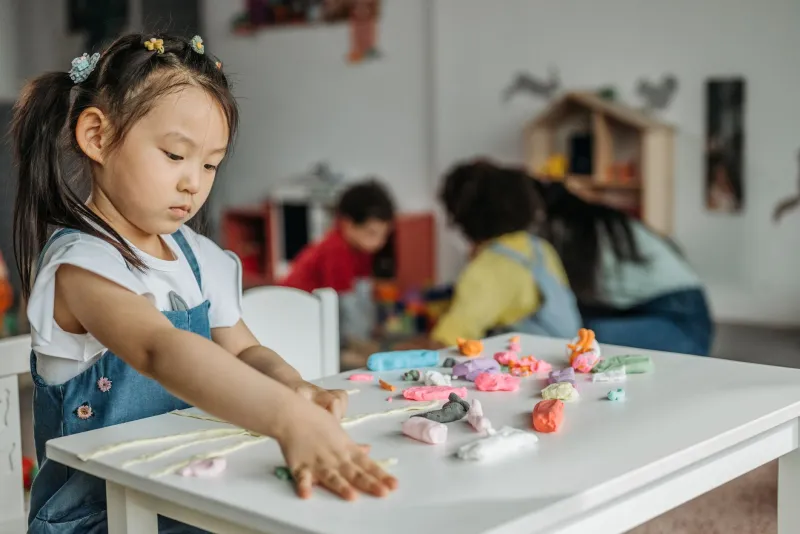
The children loved squishing it, rolling it, and shaping it into crude sculptures. Zufall realized the putty had properties that made it perfect for play — it was non-toxic, didn't stick to surfaces, and held its shape better than clay.
In 1954, she called her brother-in-law Joe McVicker, who worked for Kutol Products, with an unusual suggestion: what if they marketed their dying wallpaper cleaner as a children's toy?
The Desperate Pivot
McVicker was skeptical, but Kutol was running out of options. The wallpaper cleaning business was evaporating, and the company needed a new market fast. They decided to test Zufall's theory.
The first challenge was the product itself. Wallpaper cleaner was an unappetizing beige color, and it had a slightly industrial smell. If kids were going to play with it, the putty needed to be more appealing.
Kutol's chemists went to work, adding bright colors and improving the scent. They also refined the texture, making it softer and more pliable for small hands. The beige cleaning putty was transformed into vibrant modeling compound.
The Name That Changed Everything
Marketing the rebranded putty required a new name that would appeal to parents and children. The team at Kutol brainstormed dozens of options before settling on "Play-Doh" — a simple combination that captured both the product's purpose and its doughy texture.
The name was perfect. It was easy to say, easy to remember, and clearly communicated what the product was for. More importantly, it completely severed the connection to wallpaper cleaning, allowing consumers to see it with fresh eyes.
The Breakthrough Moment
In 1955, McVicker demonstrated Play-Doh on "Ding Dong School," a popular children's television show hosted by Dr. Frances Horwich. The appearance was a gamble — television advertising was expensive, and Kutol was betting their future on this single opportunity.
 Photo: Dr. Frances Horwich, via img.autogidas.lt
 Photo: Ding Dong School, via miro.medium.com
The response was immediate and overwhelming. Stores across the country were flooded with calls from parents wanting to buy Play-Doh for their children. Within months, Kutol went from near-bankruptcy to having a hit product on their hands.
The Accidental Empire
What happened next surprised everyone, including Kutol. Play-Doh wasn't just a temporary fad — it became a permanent fixture in American childhoods. Parents discovered that the modeling compound kept kids occupied for hours, making it invaluable for rainy days and quiet time.
Schools embraced Play-Doh as an educational tool. Teachers found it perfect for developing fine motor skills, encouraging creativity, and teaching basic concepts like colors and shapes. The product that had started as industrial cleaning putty became an essential part of early childhood education.
The Formula That Wouldn't Change
One of Play-Doh's secrets was that Kutol barely changed the original formula. The same properties that made the putty effective at cleaning wallpaper — its ability to pick up particles without leaving residue — made it perfect for play. It was safe, non-toxic, and wouldn't permanently stain furniture or clothing.
The consistency was also ideal. Unlike clay, which could dry out and crack, Play-Doh remained workable for extended periods. Unlike actual dough, it didn't attract insects or spoil. The accidental toy had accidentally perfect properties for its new purpose.
The Competition That Never Came
By the time competitors realized Play-Doh's potential, Kutol had already established an unassailable market position. The name "Play-Doh" became synonymous with modeling compound, the same way "Kleenex" became synonymous with facial tissue.
Attempts to create competing products failed to gain traction. Parents and teachers had already integrated Play-Doh into their routines, and the brand had achieved something rare: genuine cultural penetration. It wasn't just a product; it was part of childhood itself.
The Legacy of Accidental Innovation
Today, more than two billion cans of Play-Doh have been sold worldwide. The product that saved Kutol from bankruptcy became one of the most successful toys in history. But its origin story reveals something important about innovation: sometimes the best solutions come from seeing existing products with completely new eyes.
Kay Zufall's suggestion to market wallpaper cleaner as a toy seemed absurd in 1954. But her insight — that the putty's properties made it naturally appealing to children — transformed a dying industrial product into a cultural phenomenon.
What the Story Teaches Us
The Play-Doh story demonstrates how technological change can destroy established markets while accidentally creating new ones. Coal heating's disappearance killed the wallpaper cleaning business, but it also freed up a product to find its true calling.
Sometimes the most successful pivots happen when companies are forced to completely reimagine their products' purpose. Kutol didn't improve their wallpaper cleaner — they recognized that its best application had nothing to do with wallpaper at all.