Grass Roots: The Fertilizer Industry's Long Con That Turned America's Front Yards Into a National Obsession
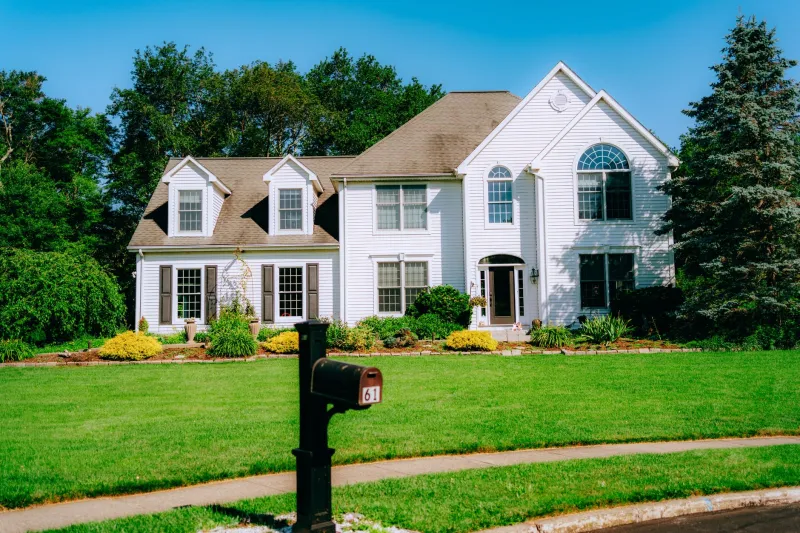
Grass Roots: The Fertilizer Industry's Long Con That Turned America's Front Yards Into a National Obsession
Somewhere in America right now, someone is mowing their lawn for the third time this week. Someone else is debating whether to overseed before fall or wait until spring. A third person is standing at a hardware store, staring at bags of fertilizer with names like Turf Builder and Lawn Food, trying to remember what NPK ratios mean.
None of these people chose this life, exactly. They inherited it — from a chain of marketing decisions, suburban planning choices, and chemical industry strategies that stretches back nearly a century and begins, of all places, in the gardens of European nobility.
A Status Symbol Crosses the Atlantic
The manicured grass lawn was originally a luxury of the European aristocracy, and a deliberately impractical one at that. In 17th and 18th century England and France, a flat expanse of closely cropped grass surrounding an estate announced something specific to visitors: the owner was wealthy enough to dedicate land to something that produced nothing. No crops. No livestock. Just grass, maintained by teams of laborers with scythes, serving no purpose beyond demonstrating that the owner could afford to waste space.
When landscape designers like Frederick Law Olmsted began shaping American public spaces in the mid-1800s — Central Park being the most famous example — they imported this aesthetic sensibility along with the European design philosophy. Olmsted's parks featured sweeping green lawns that were beautiful, communal, and meticulously maintained. Americans liked what they saw.
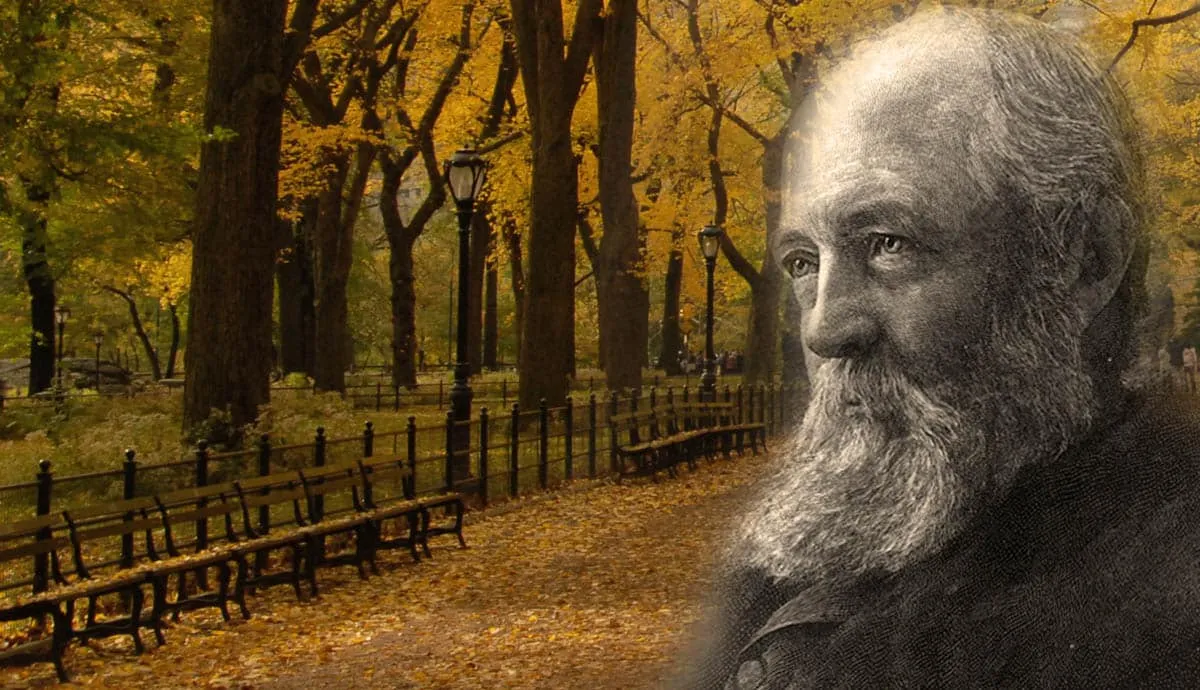 Photo: Frederick Law Olmsted, via cdn.thecollector.com
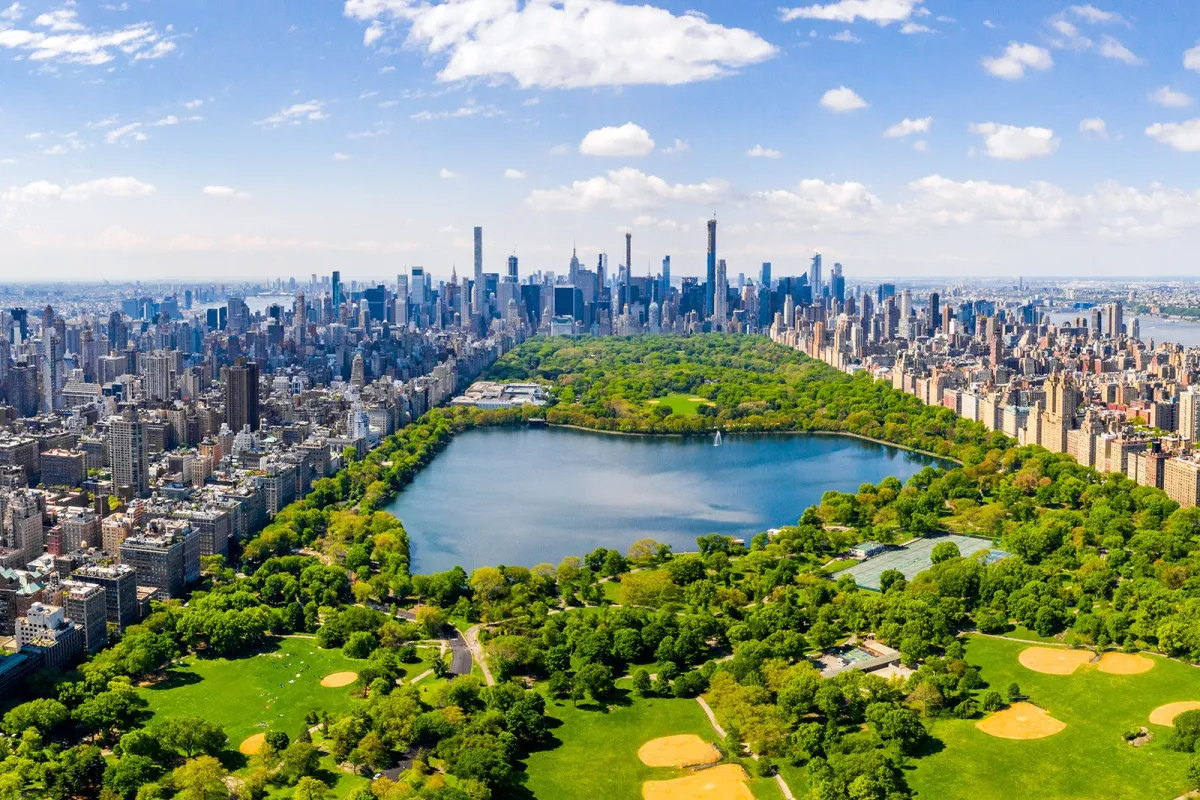 Photo: Central Park, via a.cdn-hotels.com
But the concept of a private lawn surrounding individual homes was still, in the late 19th century, largely confined to the wealthy. Most American homes sat directly against streets or were surrounded by functional kitchen gardens, dirt yards, or whatever vegetation happened to grow there naturally. Grass maintenance required either significant manual labor or, after the 1830s, a reel mower — which was a meaningful mechanical improvement over scythes but still represented a considerable time investment.
The lawn as a democratic American institution didn't exist yet. It needed a few more ingredients.
The Suburbs Needed a Rulebook
The first ingredient arrived in the postwar housing boom of the late 1940s and 1950s. Developers like William Levitt, building massive planned communities across the Northeast and beyond, needed a way to create neighborhood coherence across thousands of identical houses built quickly and cheaply. Uniform landscaping was part of the solution.
Levittown's original lease agreements famously required residents to mow their lawns at least once a week between April and November. The front lawn wasn't optional — it was contractual. Homeowners who let their grass grow too long received written notices. The social architecture of postwar suburbia was built partly on the assumption that everyone would maintain their patch of green to a consistent standard.
This conformity pressure, once established, proved remarkably self-sustaining. You mowed because your neighbors mowed. Your neighbors mowed because their neighbors mowed. The lawn became a form of social currency — evidence that you were keeping up, fitting in, meeting the unspoken standard of the block. Not mowing wasn't just lazy. It was a statement, and not a welcome one.
But conformity pressure alone doesn't explain the specific, chemical-intensive way Americans came to maintain their lawns. That part of the story involves a different set of actors entirely.
The Fertilizer Industry Finds Its Market
After World War II, American chemical manufacturers faced a significant problem. The industrial infrastructure built to produce nitrogen compounds for wartime explosives was sitting idle. These companies needed a new market for their products, and they found one in American backyards.
Scott's Company — later Scotts Miracle-Gro — was among the most aggressive and successful players in what became a decades-long campaign to convince American homeowners that their lawns required regular chemical intervention to survive. The company invested heavily in consumer education, publishing lawn care guides, sponsoring radio programs, and eventually television segments that established a detailed calendar of seasonal treatments: fertilizer in spring, weed control in summer, overseeding in fall.
The genius of the marketing was that it created a problem — the chemically inadequate lawn — and then sold the solution. Crabgrass, dandelions, and bare patches were reframed not as ordinary features of natural ground cover but as failures requiring correction. The ideal lawn was redefined upward, toward a dense, uniform, weed-free carpet of a single grass species that required exactly the inputs these companies happened to sell.
By the 1960s and 1970s, the American lawn care industry had become a multi-billion-dollar enterprise. Herbicides, fungicides, grub treatments, pH adjusters, and specialty fertilizers for different grass types filled entire sections of hardware stores. The average American homeowner was spending more time and money on their lawn than any previous generation — and largely believed they were doing something natural and traditional.
What the Lawn Actually Costs
Today, Americans collectively maintain roughly 40 million acres of lawn — an area larger than the state of Georgia — making it the single largest irrigated crop in the country. The lawn care industry generates over $100 billion annually. Americans use approximately 3 trillion gallons of water per year on lawn irrigation and apply around 80 million pounds of pesticides to residential turf.
The environmental math is striking. Lawns consume water intensively in regions that often can't afford it, contribute to fertilizer runoff that damages local waterways, and support remarkably little biodiversity compared to the native plants they replaced. The gas-powered lawn mower, for its part, produces emissions at a rate that would make most car owners wince.
None of which means your lawn is your fault. You inherited a set of expectations built by developers, chemical companies, and suburban social dynamics that operated for decades before you moved in.
The perfectly manicured American front lawn is less a timeless tradition than a very successful sales pitch — one so effective that most of us forgot someone made it.