Popcorn Wasn't Always Welcome at the Movies — Here's How It Crashed the Party

Popcorn Wasn't Always Welcome at the Movies — Here's How It Crashed the Party
Order a bucket of popcorn at a movie theater today and you'll pay somewhere between eight and fifteen dollars for something that costs the theater roughly twenty-five cents to produce. The markup is extraordinary. The ritual is so ingrained that most people don't even consciously decide to buy it — they just do, the same way they always have, because movies and popcorn feel inseparable in a way that seems ancient and inevitable.
It isn't, and it wasn't. The pairing of cinema and popcorn was not a natural cultural evolution. It was an accident of economic desperation, a reversal of policy by theater owners who'd spent years actively keeping the stuff out of their buildings — and a Depression-era hustle by street vendors who eventually made themselves impossible to ignore.
The Movie Palace Had Standards
To understand why popcorn was banned from early movie theaters, you have to understand what those theaters were trying to be.
When purpose-built movie houses began appearing in American cities in the 1910s and 1920s, they were designed to compete with legitimate theaters — the opera houses, vaudeville stages, and live performance venues that served the middle and upper-middle class. The so-called movie palaces of the era were genuinely grand: ornate lobbies, thick carpeting, uniformed ushers, chandeliers. The Roxy in New York, the Oriental in Chicago, the Fox in Detroit — these were architectural showpieces meant to signal that cinema was a serious, respectable art form attended by serious, respectable people.
 Photo: The Fox, via images.stockcake.com
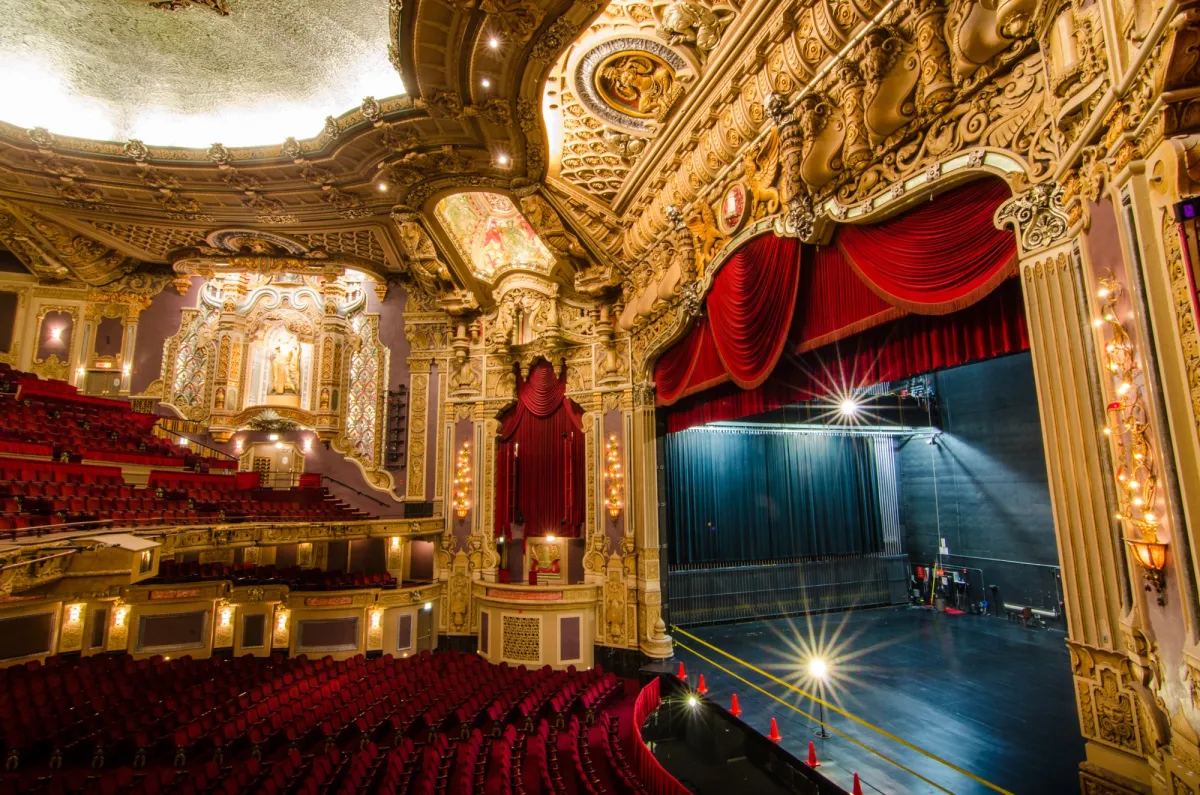 Photo: The Oriental, via s3.amazonaws.com
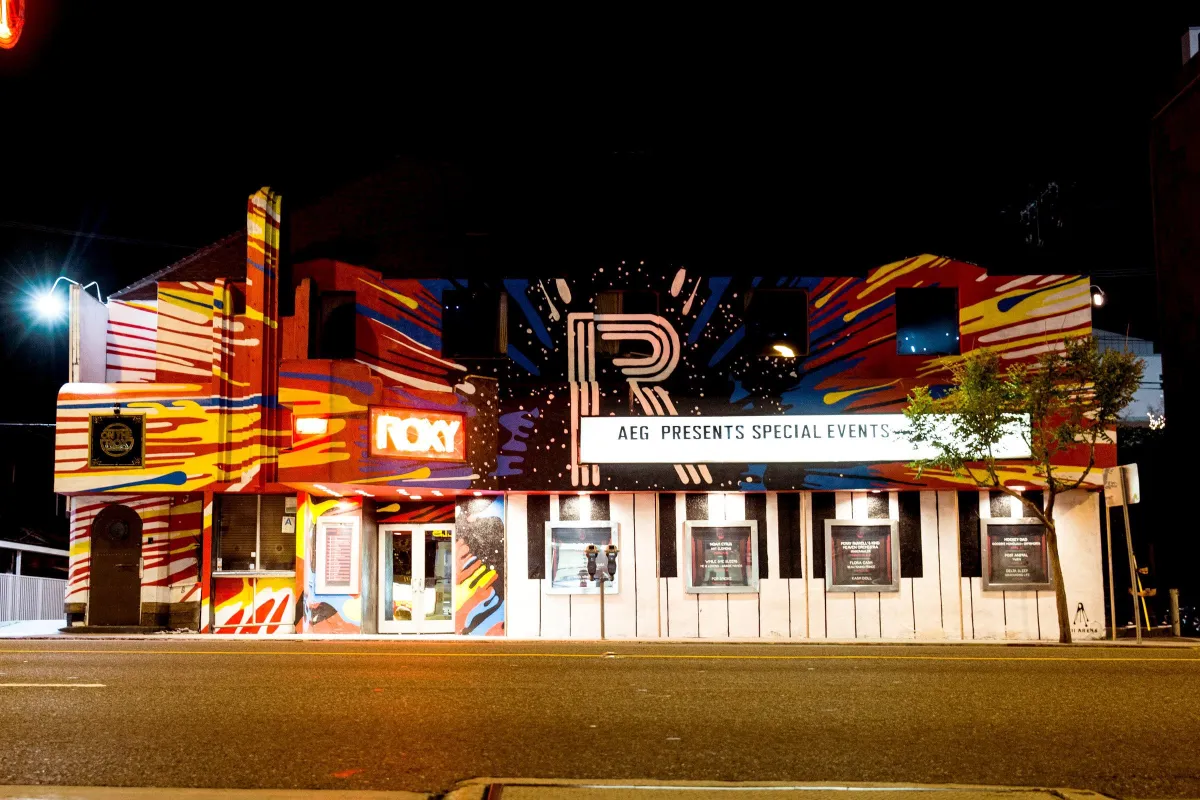 Photo: The Roxy, via aegwebprod.blob.core.windows.net
Popcorn did not fit the image. It was street food — cheap, greasy, aggressively aromatic, and associated with carnivals, outdoor markets, and the lower end of the economic spectrum. It was also loud. The crunch of a kernel in a quiet theater during a dramatic scene was the 1920s equivalent of someone's phone going off today. Theater owners were emphatic: no outside food, and certainly no popcorn.
Many early theaters went further, installing lobby concession stands that sold chocolate, candy, and soft drinks — items that could be consumed quietly and that carried a certain respectability. Popcorn was explicitly excluded from these menus. The vendors who sold it from steam-powered carts on sidewalks outside theaters were tolerated at best, shooed away at worst.
The Depression Changed the Math
Then came 1929, and everything changed.
The Great Depression didn't kill the movie business — in some ways it strengthened it, because a ten-cent ticket to a two-hour escape from economic misery was one of the few affordable luxuries working-class Americans would still prioritize. But it devastated the high-end audience that movie palaces had been built to serve. The middle-class and upper-middle-class patrons who'd filled those ornate seats stopped coming, or came much less frequently. Ticket revenues collapsed.
Theater owners were suddenly looking at their businesses differently. The popcorn vendors still camped outside their doors were doing brisk business — five cents a bag, rain or shine, drawing customers who'd walk past the theater to buy a snack and then walk in. Theater owners started doing uncomfortable arithmetic.
A bag of popcorn kernels cost almost nothing. The markup potential was enormous. Every customer who bought popcorn inside the theater was money that wasn't going to the street vendor outside. And the customers who'd once demanded a refined, popcorn-free experience? Many of them couldn't afford to be customers anymore.
One by one, theaters that had spent years banning popcorn reversed course. Some installed their own popcorn machines in lobbies. Others struck deals with vendors to operate inside the building for a percentage of sales. The carpets got a little greasier. The lobbies smelled different. The experience became something new.
By the mid-1930s, popcorn concessions were generating enough revenue at many theaters to cover their operating losses from ticket sales. Popcorn wasn't supplementing the movie business. In some cases, it was saving it.
World War II Finished the Job
If the Depression cracked open the door for popcorn, World War II blew it off the hinges.
Wartime rationing hit the American candy industry hard. Sugar was one of the first commodities rationed after the US entered the war in late 1941, and candy manufacturers — who had been the preferred concession product at movie theaters for years — couldn't produce enough to meet demand. Candy bars disappeared from shelves. The concession stands that had once featured neatly arranged chocolate bars were suddenly half-empty.
Popcorn required no sugar. It required corn, salt, and oil — none of which were rationed in the same way. While candy struggled, popcorn thrived. Theaters leaned into it. Popcorn consumption in the United States increased dramatically during the war years, with a significant portion of that growth happening inside movie theaters.
By the time rationing ended and the postwar economy kicked into gear, the association was permanent. A generation of Americans had grown up going to the movies and eating popcorn. Their children would do the same. The ritual had calcified into something that felt timeless — even though it was barely a decade old when the war ended.
The Margin That Built an Industry
The financial logic that originally persuaded Depression-era theater owners to accept popcorn has only intensified in the decades since. Today, concession sales — led by popcorn — account for roughly 40 percent of a typical movie theater's revenue, while generating profit margins that dwarf anything ticket sales can produce. Industry estimates suggest that theaters keep only about 20 to 25 percent of box office revenue after paying distributors. On a large soda and popcorn combo, the margin is closer to 85 percent.
This is why the bucket of popcorn costs twelve dollars. It's not really a snack. It's the business model.
The theater owners who banned popcorn in the 1920s weren't wrong about what it would do to their carpets or their image. They were just working with the wrong economic assumptions. When those assumptions collapsed along with the rest of the economy, the popcorn vendors waiting patiently outside were ready.
Sometimes the most enduring cultural rituals aren't designed. They're negotiated — between what an industry wants to be and what it actually needs to survive.