When Safety Became a Dirty Word: How Ford's Marketing Disaster Accidentally Saved American Lives
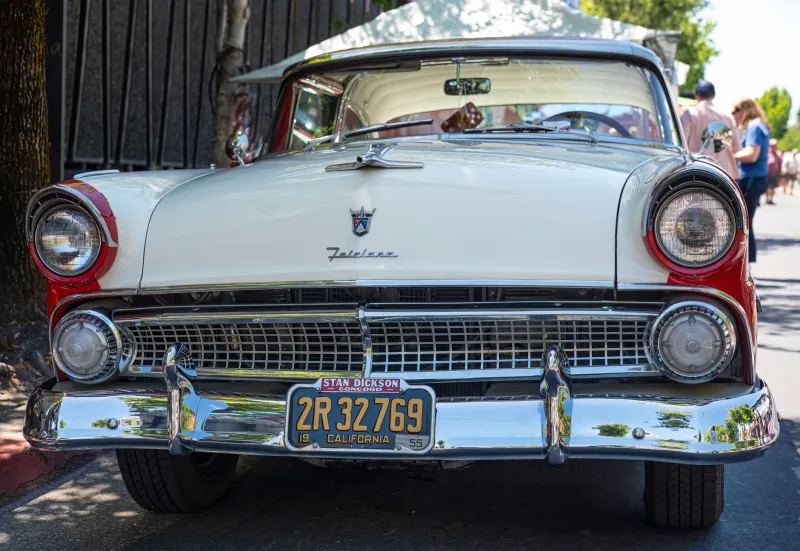
The Campaign That Almost Killed Ford
In 1956, Ford Motor Company made what seemed like a brilliant decision: they would sell cars based on safety instead of style. The campaign featured seatbelts, padded dashboards, and deep-dish steering wheels. Ford executives were certain Americans would embrace these life-saving innovations.
They were spectacularly wrong.
Sales plummeted so dramatically that Ford nearly went bankrupt. General Motors, meanwhile, sold cars with fins, chrome, and horsepower — and dominated the market. The lesson was crystal clear: Americans didn't want to think about dying in their cars. They wanted to dream about living in them.
The Unspoken Rule of Detroit
Ford's safety disaster created an unwritten law in Detroit: never mention safety. For the next decade, automakers avoided the word entirely. Seatbelts became optional equipment that almost nobody ordered. When they were installed, they were often hidden under seats or designed to be as unobtrusive as possible.
The irony was devastating. While American cars got bigger, faster, and more powerful throughout the late 1950s and early 1960s, they became death traps. Highway fatalities soared, but the industry had learned its lesson: safety doesn't sell.
The Lawyer Who Wouldn't Let It Go
Ralph Nader had other ideas. The young lawyer was obsessed with automotive safety, spending years documenting how car design killed people in crashes that should have been survivable. His 1965 book "Unsafe at Any Speed" didn't just criticize cars — it exposed how the industry actively suppressed safety research.
 Photo: Ralph Nader, via rechnung-schreiben.de
Nader's crusade gained momentum when he revealed that General Motors had hired private investigators to dig up dirt on him. The scandal backfired spectacularly, turning Nader into a folk hero and automotive safety into a national cause.
The Swedish Solution
Meanwhile, across the Atlantic, a Swedish engineer named Nils Bohlin was quietly revolutionizing seatbelt design. Working for Volvo, Bohlin had a problem: existing seatbelts were either ineffective lap belts or complicated harnesses that nobody would use.
 Photo: Volvo, via i5.walmartimages.com
 Photo: Nils Bohlin, via i.pinimg.com
Bohlin's breakthrough was elegant in its simplicity: a three-point belt that crossed the chest and lap, anchored at three points. It was easy to use, comfortable to wear, and dramatically more effective than anything that came before.
Here's the kicker: Volvo gave away the patent. They decided that some innovations were too important for corporate profits. Every automaker in the world could use Bohlin's design for free.
The Law Nobody Wanted
By the mid-1960s, political pressure was mounting. Highway deaths had become a national crisis, and Congress was demanding action. In 1966, President Lyndon Johnson signed the National Traffic and Motor Vehicle Safety Act, creating federal safety standards for all cars sold in America.
The auto industry fought back hard. They argued that safety regulations would make cars unaffordable, kill innovation, and destroy American jobs. Detroit spent millions lobbying against every proposed standard.
But the momentum was unstoppable. Starting with 1968 models, every car sold in America had to include seatbelts — not as options, but as standard equipment.
The Habit That Had to Be Learned
Having seatbelts in cars was one thing. Getting Americans to use them was another. Through the 1970s, usage rates hovered around 10%. The belts were there, but most people ignored them.
It took another two decades of public education campaigns, state laws, and cultural pressure to change behavior. "Click It or Ticket" campaigns in the 1990s finally pushed usage rates above 50%. Today, more than 90% of Americans buckle up automatically.
The Accidental Revolution
The story of seatbelts reveals how life-saving innovations sometimes succeed despite themselves. Ford's safety campaign was a commercial disaster that taught the industry to avoid talking about safety for a decade. But that failure also created the conditions for government intervention that ultimately saved millions of lives.
Nils Bohlin's three-point seatbelt design, given away freely by Volvo, is estimated to have saved over one million lives worldwide. Ralph Nader's crusade, triggered by his anger at industry indifference, forced an entire industry to prioritize safety over style.
What Changed Everything
Today, seatbelt use is so automatic that most Americans don't think about it. We buckle up the same way we turn keys or flip light switches — it's muscle memory. But this habit didn't emerge naturally. It was legislated, marketed, and socially engineered over decades.
The transformation reveals something important about how societies adopt life-saving behaviors. Sometimes the most important changes don't come from consumer demand or market forces. They come from activists, engineers, and legislators who refuse to accept preventable deaths as the cost of doing business.
Ford's 1956 safety campaign was a spectacular commercial failure. But it planted seeds that eventually grew into the modern automotive safety revolution. Sometimes the biggest disasters create the conditions for the most important victories.