How a Disinfectant Soap Convinced America It Smelled Terrible
Photo: Joe Haupt, CC BY-SA 2.0, via Wikimedia Commons
Somewhere in America right now, someone is self-consciously checking whether they need deodorant before a meeting. Someone else is on their second shower of the day. A third person is buying a product specifically designed to eliminate a smell that, for most of human history, nobody considered a social emergency.
This particular anxiety — the fear that your body is offending the people around you — is so deeply embedded in American culture that it's easy to assume it's natural. It isn't. It was invented. And the invention can be traced with uncomfortable precision to a surplus industrial disinfectant that needed a new market.
What Bathing Actually Looked Like
Before the twentieth century, Americans bathed infrequently by modern standards — and this wasn't considered negligence. It was the norm, and in many circles it was considered medically defensible. Physicians of the nineteenth century held a range of views on bathing, and a significant number warned against excessive washing, arguing that the skin's natural oils were protective and that frequent exposure to water could open the body to illness.
For working-class Americans, the logistics were also prohibitive. Heating enough water for a full bath was labor-intensive. Indoor plumbing was not yet universal. A weekly bath — or even a less frequent one — was standard practice for most households, and nobody thought to be ashamed of it because everyone was operating under the same conditions.
Body odor existed, obviously. But it existed as a fact of life rather than a personal failing. The idea that natural human scent was a social liability requiring a commercial remedy simply hadn't been introduced yet. Someone needed to introduce it.
The Disinfectant With No Civilian Market
Levers Brothers, the British soap manufacturer, developed Lifebuoy soap in 1894. The formula was built around carbolic acid — a powerful antiseptic compound that had been used in medical and military settings since Joseph Lister demonstrated its effectiveness in surgical sterilization in the 1860s. Lifebuoy was strong, harsh, and unmistakably medicinal in its scent. It was designed for environments where killing germs was the primary concern: hospitals, military barracks, and industrial workplaces.
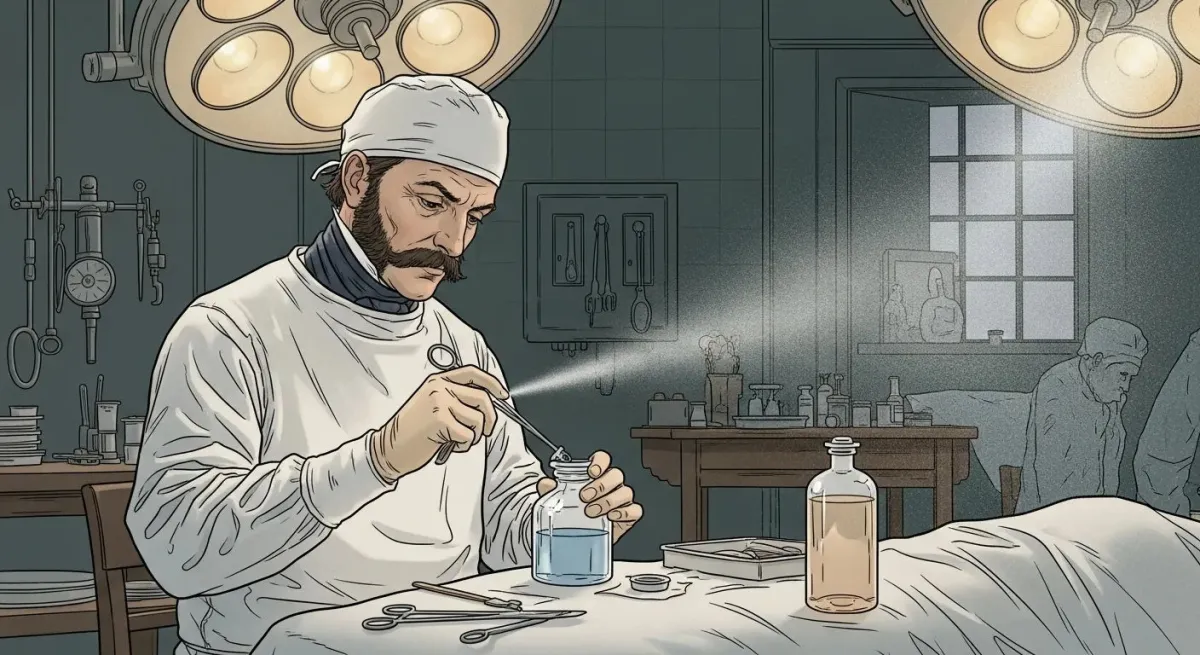 Photo: Joseph Lister, via ik.imagekit.io
The product crossed the Atlantic and found a foothold in institutional American markets, but the civilian consumer opportunity was limited. Most American households weren't thinking about germ theory in their daily routines. They weren't looking for carbolic acid soap. They were using whatever mild soap they had for the bathing they were already doing — which, again, wasn't very much.
Lever Brothers faced a problem that many industrial product manufacturers eventually encounter: the market they'd designed for was finite, and the product was capable of reaching a much larger one. They just needed to change what they were selling.
 Photo: Lever Brothers, via lh3.googleusercontent.com
The Invention of B.O.
In the 1920s, Lever Brothers launched an American advertising campaign for Lifebuoy that is now studied in marketing history classes as one of the more audacious pivots in consumer advertising. The campaign introduced a term that would become so embedded in American vocabulary that most people assume it's always existed: B.O.
Body odor — rebranded as the clinical-sounding abbreviation — was presented not as a natural human characteristic but as a social condition. A problem. One that other people noticed before you did, and that was silently costing you friendships, romantic prospects, and professional opportunities.
The advertisements were remarkably direct about the social stakes. They depicted scenarios in which likeable, well-meaning people were being quietly avoided, passed over for promotions, or rejected romantically — all because of an odor they were oblivious to. The tagline that accompanied many of these ads made the threat explicit: you might have B.O. and not even know it. Your friends won't tell you. But they notice.
This was a masterclass in manufacturing anxiety. Lever Brothers hadn't identified an existing consumer concern and built a product to address it. They had built the product first, then constructed the concern from scratch — complete with a name, a social narrative, and a cast of cautionary characters.
The Bathroom Became a Moral Space
The campaign worked beyond any reasonable expectation. Within a decade, the concept of body odor as a personal failing had become embedded in American social thinking. Other soap and deodorant companies recognized what Lever Brothers had done and moved quickly to occupy the same territory. The deodorant market, which had been negligible in the early twentieth century, exploded.
What's significant is that the advertising didn't just sell products — it restructured American domestic behavior. Daily bathing shifted from a periodic hygiene practice to a moral obligation. The bathroom went from a practical space to one freighted with social meaning. Being clean wasn't just about being clean anymore. It was about being the kind of person who was clean — which was a very different proposition, and one that required purchasing things on a regular basis.
The timing aligned with broader changes in American infrastructure. Indoor plumbing was becoming standard in urban and suburban homes through the 1920s and 1930s. Hot water heaters were becoming affordable. The physical barriers to daily bathing were falling away at exactly the moment that the advertising industry was constructing the psychological motivation to do it.
The Problem That Sold the Cure
Lifebuoy's formula was eventually softened for civilian use — the original carbolic formulation was too harsh and too pungent for daily domestic application. The product that reached American bathroom shelves was milder than what had shipped to military hospitals, but the brand identity remained anchored in the idea of serious, medical-grade cleanliness.
That positioning was the real product. Lever Brothers sold Americans not just soap but a self-conception: the idea that they were people who took hygiene seriously, who were aware of the risks of body odor, who wouldn't let something as controllable as smell undermine their social standing.
The fact that body odor had never actually been the social catastrophe the ads implied was beside the point. The campaign succeeded because it was specific enough to feel credible and vague enough to be universally applicable. Anyone could worry about B.O. That was rather the idea.
Decades later, Americans spend billions annually on deodorants, antiperspirants, body washes, and scented products of every description — maintaining a daily hygiene routine that would have bewildered their great-grandparents. The anxiety that drives those purchases was, in the most literal sense, manufactured. A surplus military disinfectant needed a market, and the market it found was the American self-image.
That's a remarkably effective piece of work — even if the problem it solved was one it invented.