The Buffalo Paper Crisis That Built America's Bureaucracy
The Office Where Papers Went to Die
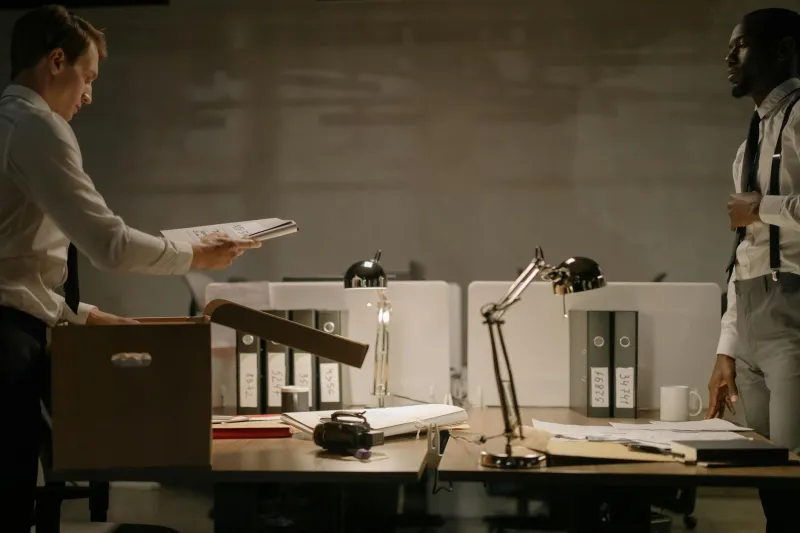
In 1892, the Larkin Soap Company's insurance department in Buffalo, New York, was drowning in paper. Claims forms, policy documents, correspondence, and financial records were stuffed into an elaborate system of flat wooden drawers and pigeonhole compartments that lined the office walls from floor to ceiling.
 Photo: Buffalo, New York, via static1.thetravelimages.com
Finding a specific document was a nightmare that could take hours. Clerks would pull out entire drawers, dump their contents on tables, and sort through hundreds of papers to locate a single letter. Important documents regularly went missing for weeks. The whole system was a monument to inefficiency.
Edwin G. Seibels, the department's chief clerk, was obsessed with this problem to a degree that his colleagues found alarming. While other clerks accepted the chaos as an inevitable part of office life, Seibels spent his evenings sketching organizational systems and measuring document storage spaces.
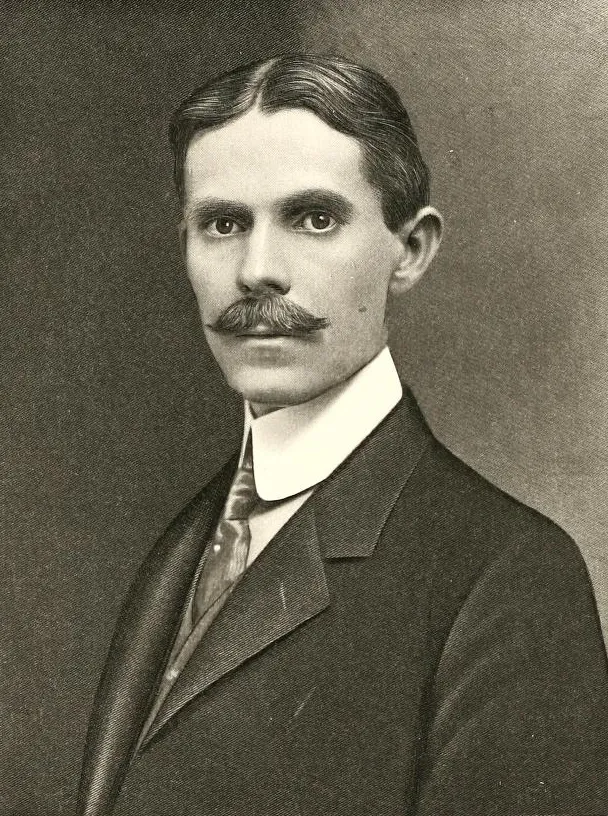 Photo: Edwin G. Seibels, via images.findagrave.com
His obsession was about to reshape American business forever.
The Radical Idea Nobody Believed In
Seibels's solution seemed almost absurd: instead of storing papers flat in horizontal drawers, why not hang them vertically in folders that could slide back and forth like books on a shelf? Documents could be organized alphabetically or by date, and finding any specific paper would take seconds instead of hours.
He built a prototype using a wooden box and manila folders with tabs along the top edge. The folders hung from metal rails, allowing easy access to any document without disturbing the others. It was elegant, efficient, and completely foreign to how American offices operated.
When Seibels demonstrated his system to Larkin's management, their reaction was skeptical at best. Vertical filing seemed unnatural, almost dangerous. How could you be sure papers wouldn't fall out? How would you know if documents were missing? The traditional flat storage system might be inefficient, but at least it was familiar.
Seibels was told to stick with his regular duties and stop wasting time on impractical inventions.
The Underground Revolution
Undeterred, Seibels continued refining his vertical filing system after hours. He partnered with a local cabinetmaker to produce steel versions of his wooden prototype, creating what would become the first modern filing cabinets. The steel construction made them fireproof — a crucial selling point in an era when office fires regularly destroyed entire companies' records.
By 1893, Seibels had quietly convinced several Buffalo businesses to try his filing system. The results were dramatic: document retrieval times dropped from hours to minutes, missing papers became rare, and office productivity increased measurably.
Word began to spread through Buffalo's business community, but slowly. The vertical filing cabinet was so different from traditional office furniture that many managers couldn't envision how it would work in their spaces.
The Insurance Industry Discovers Efficiency
The breakthrough came when other insurance companies heard about Larkin's dramatically improved efficiency. Insurance was a paper-intensive business where the ability to quickly locate policies and claims could mean the difference between profit and bankruptcy.
By 1895, insurance companies across New York State were ordering Seibels's filing cabinets. The efficiency gains were too significant to ignore: clerks who had previously spent half their day searching for documents could suddenly focus on actual work.
The transformation was particularly dramatic in large offices. Companies that had employed dozens of clerks just to manage paper storage found they could operate with half the staff while handling twice the volume of documents.
The Steel Box That Conquered America
Once the insurance industry adopted vertical filing, the system spread rapidly to other sectors. Banks, law firms, government offices, and manufacturing companies all faced similar paper management challenges, and Seibels's solution worked equally well for all of them.
By 1900, filing cabinet manufacturers had emerged in major industrial cities across the country. Companies like Shaw-Walker, Globe-Wernicke, and Steelcase built entire business models around vertical filing systems, constantly improving the design with better locks, smoother drawers, and more durable construction.
The filing cabinet became standard office furniture with surprising speed. By 1910, any business that still used the old flat-drawer system seemed hopelessly backward. The steel filing cabinet had become as essential to office operations as desks and chairs.
The Architecture of Information
The filing cabinet revolution changed more than just document storage — it transformed how Americans thought about organizing information. The alphabetical and numerical systems that made vertical filing effective became standard approaches to categorizing everything from customer records to inventory lists.
Government agencies embraced filing cabinets with particular enthusiasm. The ability to organize and retrieve citizen records, tax documents, and administrative correspondence revolutionized public administration. By 1920, government offices from city halls to federal agencies were lined with rows of identical steel filing cabinets.
This standardization had unexpected consequences. The filing cabinet's uniform dimensions influenced office design, creating the grid-like layouts of cubicles and administrative spaces that dominated American workplaces for most of the twentieth century.
The Digital Echo
The organizational principles that Seibels developed for his filing system became the foundation for how Americans approached information management in the digital age. The folder-and-file structure of computer operating systems directly mirrors the cabinet-and-folder organization of vertical filing.
Terms like "files," "folders," and "directories" all trace back to the physical filing systems that Seibels pioneered. Even today, when most office documents exist only as digital files, we still organize them using the hierarchical structure that was invented to solve a paper storage problem in 1890s Buffalo.
The Invisible Infrastructure
Seibels's filing cabinet succeeded because it solved a problem that every American office shared, but it also created something larger: a standardized approach to information organization that became invisible infrastructure for modern business and government.
The steel filing cabinet wasn't just office furniture — it was the physical foundation for American bureaucracy. Every government form, every business record, every legal document was organized using principles that one paranoid insurance clerk developed to solve his own office's paper crisis.
Today, as offices go increasingly paperless, the filing cabinet has largely disappeared from American workplaces. But its organizational logic lives on in every computer file system, every database, and every digital archive. Seibels's solution to a nineteenth-century problem in Buffalo became the blueprint for how Americans organize information in the digital age.
The humble filing cabinet proves that the most transformative inventions are often the most mundane — steel boxes that quietly revolutionize entire civilizations, one document at a time.