The Fungus That Ate America's Favorite Banana — And Replaced It With One Nobody Asked For
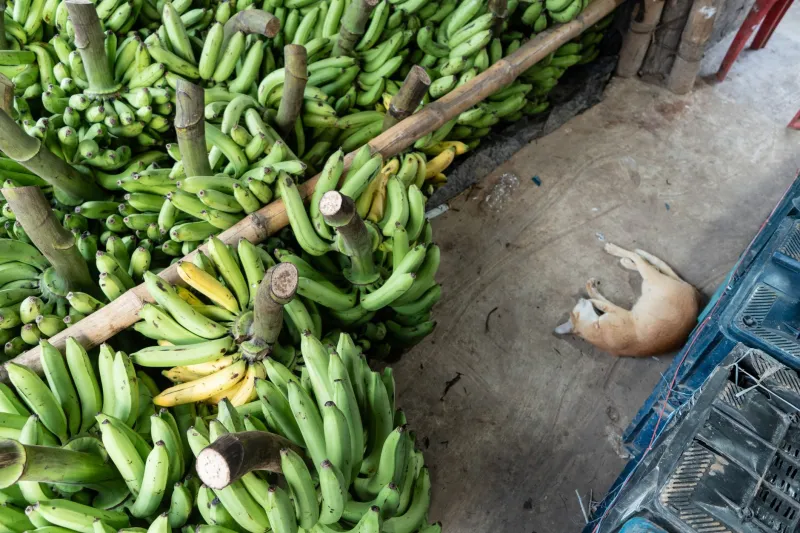
Pick up a banana at any grocery store in America and you're holding a Cavendish. It's the yellow, slightly sweet, curved fruit that's become so universal most people don't even think of it as having a name. It's just a banana. But here's the thing: it almost didn't exist in American kitchens at all. The banana industry didn't choose the Cavendish because it tasted better. They chose it because a disease wiped out their entire supply chain and left them with no other option.
The banana we were supposed to be eating? It's basically gone.
The Original Banana Americans Actually Loved
Before the 1950s, the dominant commercial banana in the United States was the Gros Michel — nicknamed "Big Mike" by the fruit industry. And by most accounts, Big Mike was genuinely superior. It was creamier, richer, and held its flavor longer than what we eat today. The banana runts candy flavor that older Americans sometimes describe as tasting "more like a real banana"? That's not nostalgia. That's actually based on the Gros Michel's chemical makeup. Artificial banana flavoring was developed to mimic Big Mike, not the Cavendish — which is why the candy and the fruit taste so different today.
Big Mike was also a commercial dream. It had a thicker peel, which made it more durable during shipping. It bruised less easily. It had a longer shelf life. The United Fruit Company — the massive corporation that dominated the Central American banana trade — had built its entire operation around it. Thousands of acres of plantation land were devoted exclusively to Big Mike. Business was booming.
Then the soil started dying.
Panama Disease and the Wipeout Nobody Saw Coming
Fusarium oxysporum cubense — better known as Panama Disease — is a soilborne fungal pathogen that attacks banana plants from the roots up. It doesn't just kill individual plants. It colonizes the soil itself, making it impossible to grow susceptible banana varieties in the same ground again, sometimes for decades.
By the 1950s, Panama Disease had torn through plantation after plantation across Central America. The Gros Michel was devastatingly vulnerable to it. Once the fungus arrived in a region, there was essentially nothing growers could do. They couldn't spray it away. They couldn't rotate crops and come back. The land was compromised, and so was Big Mike.
The United Fruit Company and its competitors faced an existential crisis. The product that had built their entire industry was disappearing in real time. Growers tried relocating operations, clearing new land, and replanting — but the fungus kept spreading. By the early 1960s, commercial Gros Michel production for the American market had effectively collapsed.
The Cavendish: A Backup Plan That Became the Default
The Cavendish wasn't a secret weapon. It had been known to horticulturalists for years — it was already being grown in parts of Asia and the Canary Islands. What it had going for it was simple: it was immune to the strain of Panama Disease that had devastated Big Mike.
It wasn't particularly beloved. Early industry insiders noted that the Cavendish was thinner-skinned, bruised more easily, and had a noticeably different — many said inferior — flavor profile. Shipping it required more care. It wasn't the banana anyone would have designed from scratch for mass-market distribution.
But it was available. And in an industry staring down empty plantations, available was enough.
Growers replanted. Shipping companies adapted their handling processes. Grocery stores stocked the new variety. And American consumers, most of whom had no idea a swap had even happened, just kept buying bananas.
How Forgetting Became the Point
The transition was so complete, and happened fast enough, that it essentially erased the Gros Michel from American cultural memory. There was no marketing campaign announcing the change. No press release explaining that the banana had been quietly replaced. Stores simply started selling Cavendish bananas, and within a generation, that was just what a banana was.
The industry had accidentally pulled off one of the most seamless product replacements in grocery history — not through clever branding or consumer research, but through agricultural catastrophe and no other choice.
Today, the Gros Michel still exists. It's grown in small quantities in parts of Southeast Asia and can occasionally be found at specialty markets. People who manage to try it often describe it as noticeably richer and sweeter than what they're used to. But it's never coming back to mainstream American supermarkets at scale. The infrastructure, the supply chains, the plantation systems — they were all rebuilt around the Cavendish decades ago.
The Irony Hiding in the Fruit Bowl
Here's the part that should make you pause: the Cavendish is now facing its own version of Panama Disease. A different strain — Tropical Race 4 — has been spreading through Cavendish plantations in Asia, Australia, and Latin America since the 1990s. Researchers and growers are actively working on disease-resistant alternatives, and the banana industry is once again quietly scrambling to figure out what comes next.
Which means the banana you're eating today might not be the banana your grandchildren grow up with. The fruit on your counter is, in a very real sense, a placeholder — the result of one crisis, and potentially the casualty of another.
Every ordinary banana has an extraordinary story. This one just happens to be a story about survival, substitution, and a fungus that quietly rewrote American grocery history without anyone noticing.