Americans Clipped Candles to Their Christmas Trees and Called It Festive

Photo by Photo by Annie Spratt on Unsplash on Unsplash
Somewhere between Thanksgiving and Christmas, tens of millions of Americans will drape LED light strands across a tree, plug them into a wall outlet, and spend approximately zero seconds thinking about fire safety. That's the point. Modern Christmas lights are so thoroughly domesticated that the idea of open flames on a pine tree seems almost absurd — a historical footnote, something people did before they knew better.
Except that people absolutely knew better, and they did it anyway. For the better part of a century, the American Christmas tree tradition involved clipping actual burning wax candles to actual dry pine branches inside actual wooden houses, and the cultural momentum behind the practice was so powerful that even a direct replacement technology — one backed by Thomas Edison's operation — took nearly thirty years to fully displace it.
The story of how a genuine fire hazard became a beloved national tradition, and then transformed into something safe enough for a toddler to touch, is one of the stranger chapters in American holiday history.
Where the Burning Tree Idea Actually Came From
The decorated Christmas tree didn't originate in America. It arrived with German immigrants, particularly in Pennsylvania, during the early 1800s. The tradition had roots in German-speaking Europe, where decorated trees — sometimes with candles — had been part of the Christmas season for at least a couple of centuries before anyone carried the custom across the Atlantic.
The candle element made a certain kind of sense in the original context. Candlelight was simply how you illuminated everything in the pre-electric era. A tree lit with small candles at Christmastime was visually dramatic in a way that no other decoration of the period could match — warm, flickering, alive in a way that paper ornaments or ribbons simply weren't. The danger was real, but it existed alongside every other candle in the house. It wasn't uniquely reckless in a world where open flames were already everywhere.
The tradition spread rapidly beyond German immigrant communities after a widely circulated illustration in 1848 showed the British royal family gathered around a decorated, candle-lit tree. Americans, who had a complicated but persistent admiration for European aristocratic customs, took the image as social permission. If it was good enough for Queen Victoria, it was good enough for the parlor in Ohio.
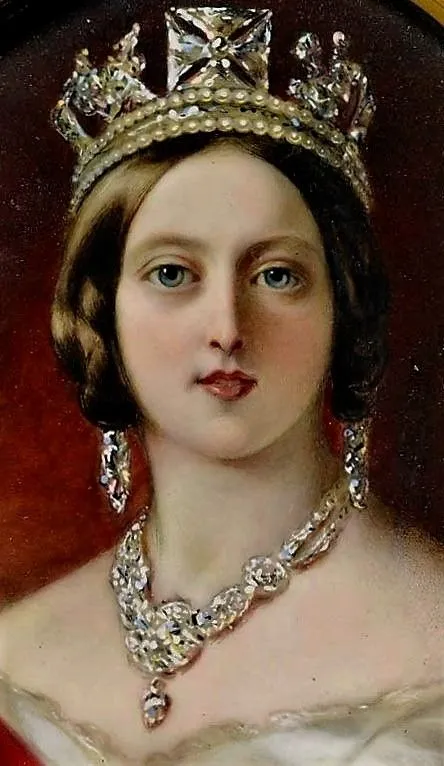 Photo: Queen Victoria, via i.pinimg.com
The Annual Fire Season Nobody Talked About
Here's the part that doesn't make it into the nostalgic retellings: Christmas trees were a genuine and recurring source of house fires throughout the second half of the 1800s and into the early 1900s. Fire departments in American cities tracked tree-related fires as a seasonal category, the way they now track fireworks injuries around the Fourth of July.
The physics of the problem were straightforward. A cut pine tree loses moisture rapidly indoors. By Christmas Day, many trees were significantly drier than they'd been when first brought inside. The candles used were small, typically mounted in metal clips designed to grip individual branches, and they burned for as long as the wax lasted — which was longer than it took an errant flame to reach a dry needle. Families were advised to keep buckets of water nearby. Some did. Some didn't. Newspapers ran annual warnings. The fires kept happening.
And yet the tradition held. Because the candle-lit tree was genuinely, undeniably beautiful, and because beauty has always been willing to negotiate with danger.
Edison's Associate and the Thirty-Year Sales Problem
In 1882, Edward Johnson — a business associate of Thomas Edison and vice president of the Edison Electric Illuminating Company — did something that should have immediately ended the candle era. He hand-wired eighty small electric bulbs in red, white, and blue, strung them around a rotating Christmas tree in his New York City home, and invited journalists to come look at it.
 Photo: Edward Johnson, via cdn-res.keymedia.com
The coverage was enthusiastic. The technology was clearly superior in every measurable way. Electric lights didn't drip wax. They didn't require supervision. They didn't set fire to the branches when the family left the room. They could stay on all night. They were, objectively, a better solution to the problem of illuminating a Christmas tree.
They also cost a fortune. In the 1880s, having electricity in your home at all was a luxury reserved for the wealthy. Hiring someone to wire a custom light display for your tree — which is what the early adopters had to do — was extravagant even by the standards of people who could already afford electricity. The average American family wasn't switching from candles because the average American family had no infrastructure to switch to.
Electric Christmas lights began to be sold commercially in the early 1900s, but the prices remained prohibitive for most households well into the 1910s and 1920s. Candles were cheap and universally available. The new technology was aspirational at best.
Sentiment Versus Safety, and How Safety Eventually Won
What finally turned the tide wasn't a single dramatic moment. It was the slow accumulation of two things happening simultaneously: electricity becoming cheaper and more widely available across American homes, and fire safety campaigns becoming increasingly pointed about exactly how many houses the candle tradition was destroying each December.
Insurance companies got involved. Fire marshals issued increasingly stern public statements. By the 1930s, electric lights had dropped in price to the point where a working-class family could reasonably afford a string of them, and the cultural prestige of the electric tree had filtered down from wealthy early adopters to the broader middle class.
The candle tradition didn't end with a ban or a law. It ended the way most dangerous customs end — gradually, as the safer alternative became accessible enough that the risk stopped feeling worth it.
Today's LED strands consume a fraction of the energy that even the mid-century electric bulbs used, run cool enough to touch, and carry UL safety certifications that would have seemed like science fiction to the family keeping a water bucket next to their 1890 parlor tree. The light is still warm. The tree still glows. Nobody is checking the bucket.
The fire hazard became a tradition, the tradition became an industry, and the industry eventually figured out how to give people the same feeling without the flames. That's not a bad outcome for something that started with German immigrants clipping candles to pine branches and hoping for the best.