The Crumpled Paper Trail: Why You've Been Hoarding Slips of Paper Since Ancient Rome
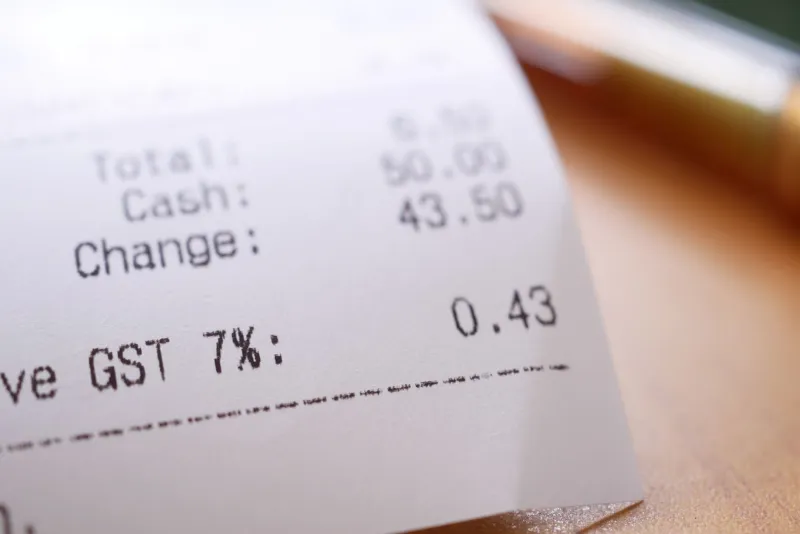
Somewhere in your house right now — a glovebox, a junk drawer, the depths of a coat pocket — there's a curled strip of paper documenting a purchase you don't remember making. You didn't keep it on purpose. You just couldn't bring yourself to throw it away.
The receipt is the most successful piece of paper in history, and it got that way long before anyone in America bought anything.
Wax Tablets and Tax Collectors
The receipt predates paper. In ancient Rome, transactions were recorded on wax-coated wooden tablets and, for anything that mattered, scratched into pottery shards called ostraca. Archaeologists digging through Roman military outposts have found receipts for barley, wine, and sandals — soldiers essentially keeping expense reports. One famous shard from around 200 AD records the sale of a woman named Gemella, a grim reminder that some of history's earliest paper trails documented humanity's worst transactions.
The Roman Empire's tax machine also demanded documentation. Merchants needed proof they'd paid; officials needed proof they'd collected. The receipt was born not as a convenience but as a defense — a way for ordinary people to prove, to a suspicious bureaucracy, that they had already done the thing.
That original purpose never really changed.
Carbon Paper and the American Checkout
Fast-forward to 19th-century America, and the receipt got its modern superpowers: speed and copies. Before carbon paper, a shopkeeper wrote out receipts by hand, one at a time — slow, and easy to fudge. Then came the mechanical cash register, patented by James Ritty in 1879, a saloon owner who wanted to stop his bartenders from pocketing the till. His "Incorruptible Cashier" printed a running record of every sale, making the receipt a tool against theft as much as proof of purchase.
Carbon paper, developed in the 1820s and perfected over the following decades, let a single transaction produce identical copies for buyer, seller, and the back office. By the mid-20th century, the American checkout ritual was set: ring it up, tear it off, stuff it in the bag. Millions of receipts, cranked out on dot-matrix printers, began their one-way journey toward gloveboxes nationwide.
The Digital Age Couldn't Kill It
Here's the remarkable part: the receipt survived the computer. Email, smartphones, and e-commerce should have made paper receipts obsolete a decade ago. Instead, they're still everywhere, because three things keep them alive.
First, returns. American retailers have among the most generous return policies in the world, and the receipt is the admission ticket. Second, trust. A paper slip is a physical record that can't be edited, hacked, or quietly deleted — a feature people rediscover every time an email receipt lands in spam. Third, and least glamorously, taxes. The IRS wants documentation, and "the shoebox of receipts" remains the unofficial filing system of America's freelancers.
Meanwhile, the receipt itself keeps mutating. Thermal paper — the slick, heat-sensitive stock that replaced ink — turned out to carry bisphenols, prompting a slow industry shift toward safer coatings and paperless options. Digital receipts now ping into inboxes within seconds of a tap of a credit card. And yet, ask any cashier: plenty of customers still want the paper one. Old habits, it turns out, are load-bearing.
Proof That You Were There
There's something quietly human about the receipt's persistence. It's not really information — nobody reads a receipt for pleasure. It's evidence. A small, official-sounding declaration that a thing happened, that money moved, that you were there.
That's why we can't throw them away, even when we know we never will need them. The Romans scratched purchases into pottery because memory wasn't enough. Two thousand years later, we're still doing the same thing, just with thermal paper and a drawer we're afraid to open.
The paper days may finally be numbered — but the habit underneath them isn't going anywhere. We'll keep demanding proof of purchase long after the proof stops being paper. We'll just be hoarding it somewhere else.