When the Navy's Biggest Flop Launched a Million Weekend Warriors
The Military's Floating Mistake
In 1942, as World War II raged across the Pacific, the U.S. Navy faced a critical shortage of materials. Steel was desperately needed for battleships and destroyers, aluminum for aircraft. So when a small team of engineers proposed building patrol boats from a new material called fiberglass-reinforced plastic, military brass was intrigued enough to fund a prototype.
The results were immediate—and disappointing. The experimental boats were lighter than their wooden counterparts, sure, but they flexed too much in rough seas. They couldn't mount heavy weapons without structural damage. Worst of all, sailors complained they felt "flimsy" compared to the solid thunk of wood or metal hulls.
By 1944, the Navy had quietly shelved the fiberglass boat program. The prototypes were declared surplus and sold off to civilian contractors for pennies on the dollar. Military officials considered it a failed experiment, a footnote in wartime innovation.
They couldn't have been more wrong.
A Peacetime Revolution in Miniature
Ray Greene was a former Navy engineer who'd worked on those discarded fiberglass prototypes. When he returned to civilian life in 1946, he couldn't stop thinking about what the military had gotten wrong. Yes, fiberglass boats were too flexible for naval warfare—but that same flexibility made them nearly unsinkable in the hands of weekend fishermen.
 Photo: Ray Greene, via raygreene.com
Greene started small, building 14-foot fishing boats in his garage in California. He marketed them not to professionals, but to the growing ranks of suburban families flush with postwar prosperity. His pitch was simple: these boats were lightweight enough for one person to trailer, tough enough to last decades, and cheap enough for a middle-class family to afford.
The first production run sold out in three weeks.
The Accidental Democracy of Water
What Greene discovered was that fiberglass had accidentally solved the biggest barrier to recreational boating: class. For generations, pleasure boats had been handcrafted wooden vessels that required either serious money or serious skill to own and maintain. You needed a yacht club membership, a dedicated slip, and often a crew.
Fiberglass changed everything. These boats required virtually no maintenance—no caulking, no annual refinishing, no worry about rot or marine borers. A factory worker could buy one on Friday and be fishing by Saturday morning. More importantly, he could trailer it home and store it in his driveway.
"We democratized the water," Greene would later say. "Suddenly every suburban dad could be Captain Ahab on the weekend."
From Military Surplus to Cultural Phenomenon
By 1950, dozens of companies were manufacturing fiberglass boats using techniques pioneered in those abandoned Navy prototypes. The boats got bigger, fancier, and more specialized. Ski boats appeared for the new sport of waterskiing. Bass boats were designed specifically for tournament fishing. Cabin cruisers brought the suburban living room to the lake.
The numbers tell the story of an accidental cultural revolution. In 1945, there were roughly 3 million recreational boats in America, almost all wood. By 1970, there were 8 million boats, with fiberglass models outselling wood by ten to one. Today, the recreational boating industry generates over $50 billion annually, supporting nearly 700,000 jobs.
The Weekend That Never Ends
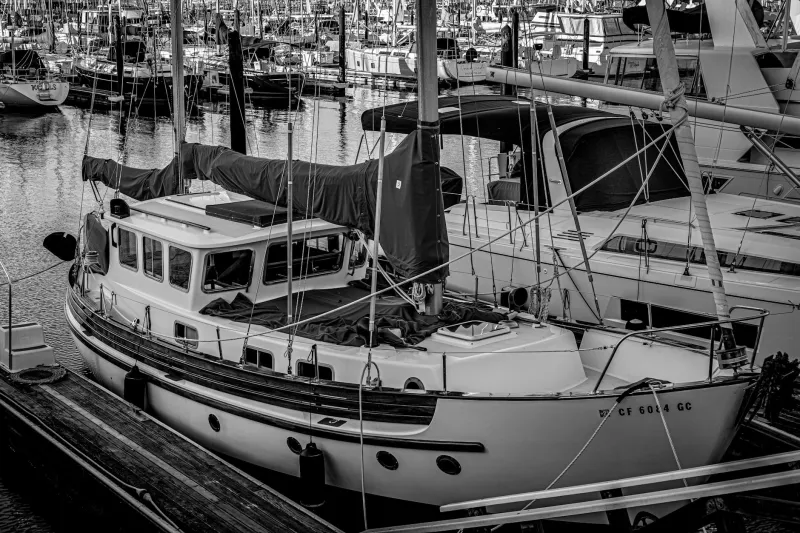
Walk through any marina today and you're seeing the legacy of that failed Navy experiment. The sleek fiberglass hulls, the weekend warriors loading coolers and fishing gear, the suburban families teaching kids to ski—none of it would exist without those "flimsy" prototypes that military brass rejected as unsuitable for war.
The irony is perfect: the Navy wanted boats tough enough for battle, but what America really needed were boats gentle enough for leisure. Those rejected prototypes didn't just create an industry—they created a new way for Americans to spend their free time.
Every summer weekend, millions of Americans hitch trailers to SUVs and head for the water, unknowingly participating in a ritual that began with military surplus and an engineer's hunch that the Navy had missed the point entirely. The boats they're towing are direct descendants of a technology the military threw away—and America's lakes and rivers have never been the same.